Sep 18, 2026Weighted Blankets
Why 5×5 cm Quilting Matters in a Weighted Blanket
Quilting size affects how well glass beads stay in place. Here is why smaller 5×5 cm compartments can help reduce shifting and improve weight distribution.
Why 5×5 cm Quilting Matters in a Weighted Blanket
When buying a weighted blanket, most people look at the weight, fabric, size and color.
But there is another detail that is easy to notice once you look inside the product:
The size of the quilting compartments.
The glass beads inside a weighted blanket need to stay distributed across the blanket. If the compartments are too large, the beads have more space to move around inside each pocket.
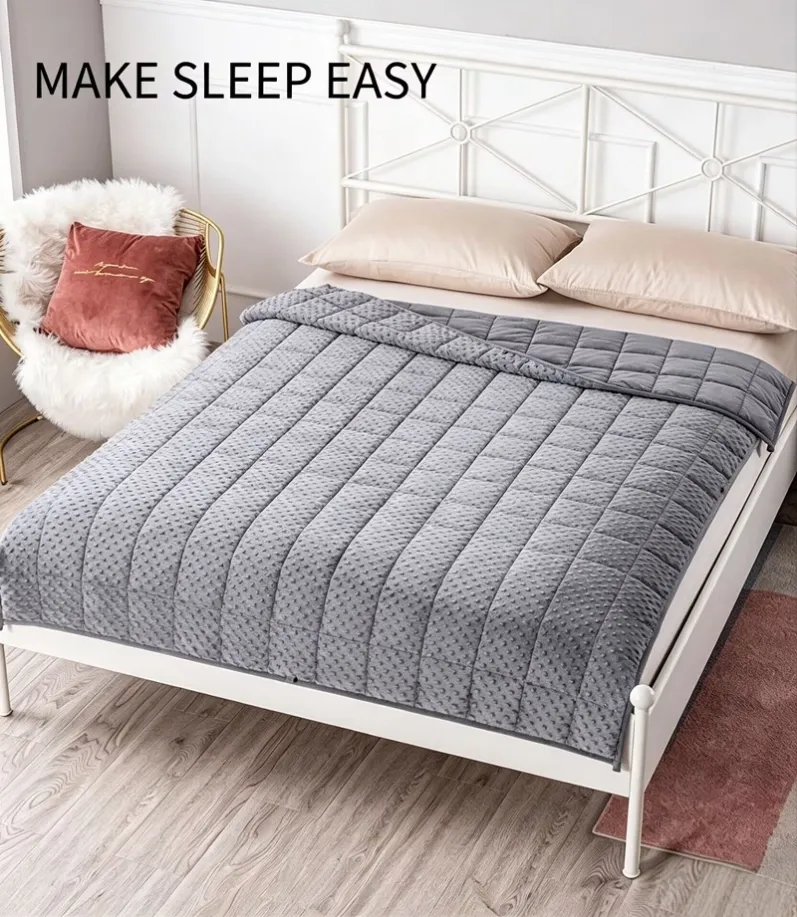
This is one reason we use 5×5 cm quilting for our weighted blankets.
It creates smaller compartments that help keep the glass beads more controlled and the weight more evenly distributed.
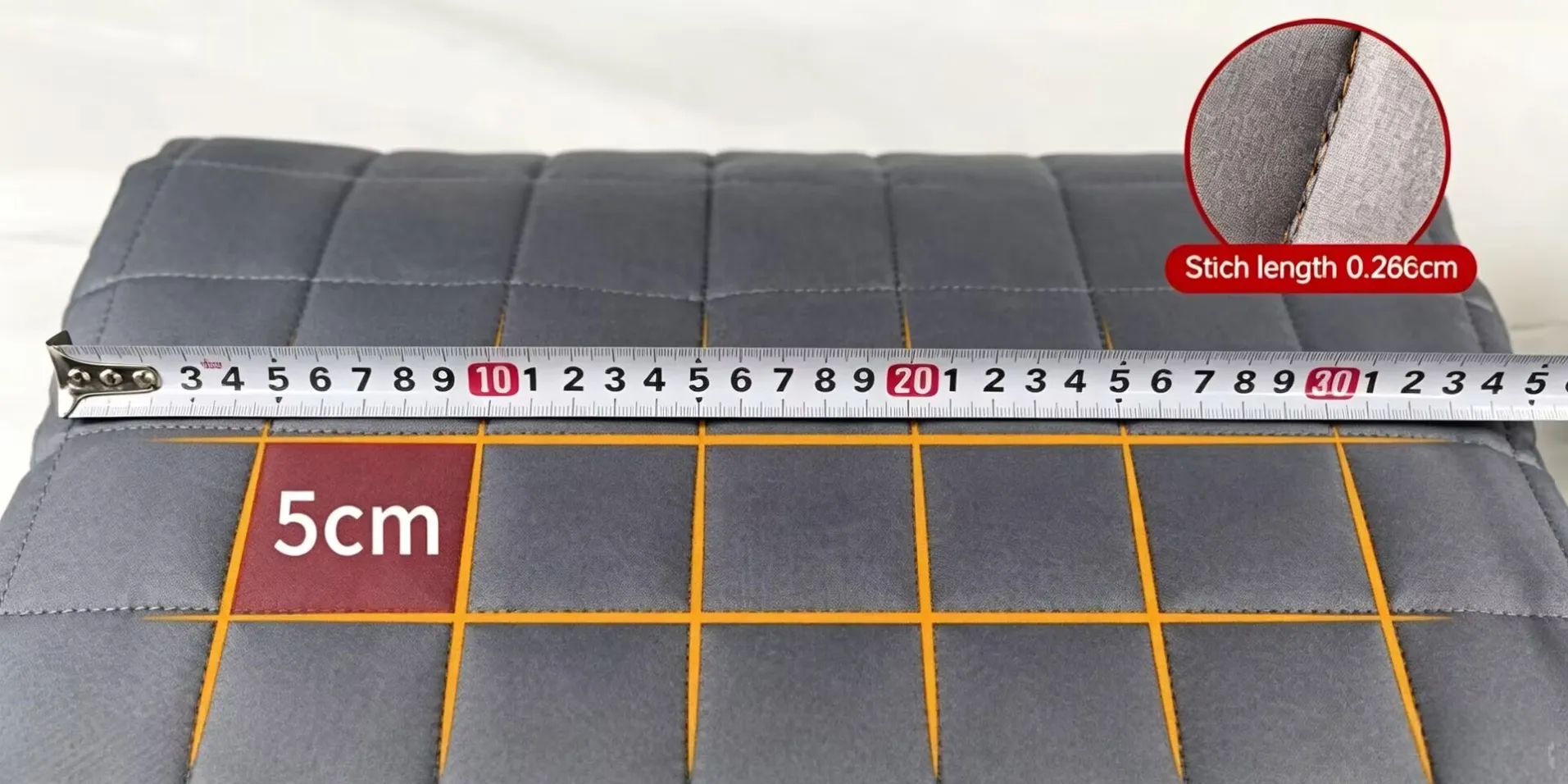
1. Smaller Compartments Help Control Bead Movement
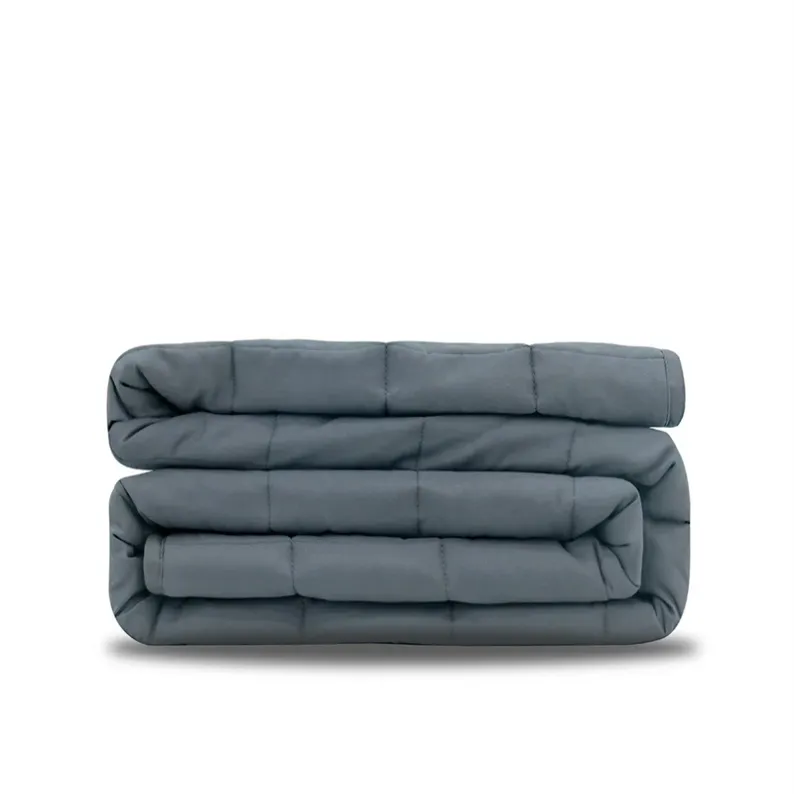
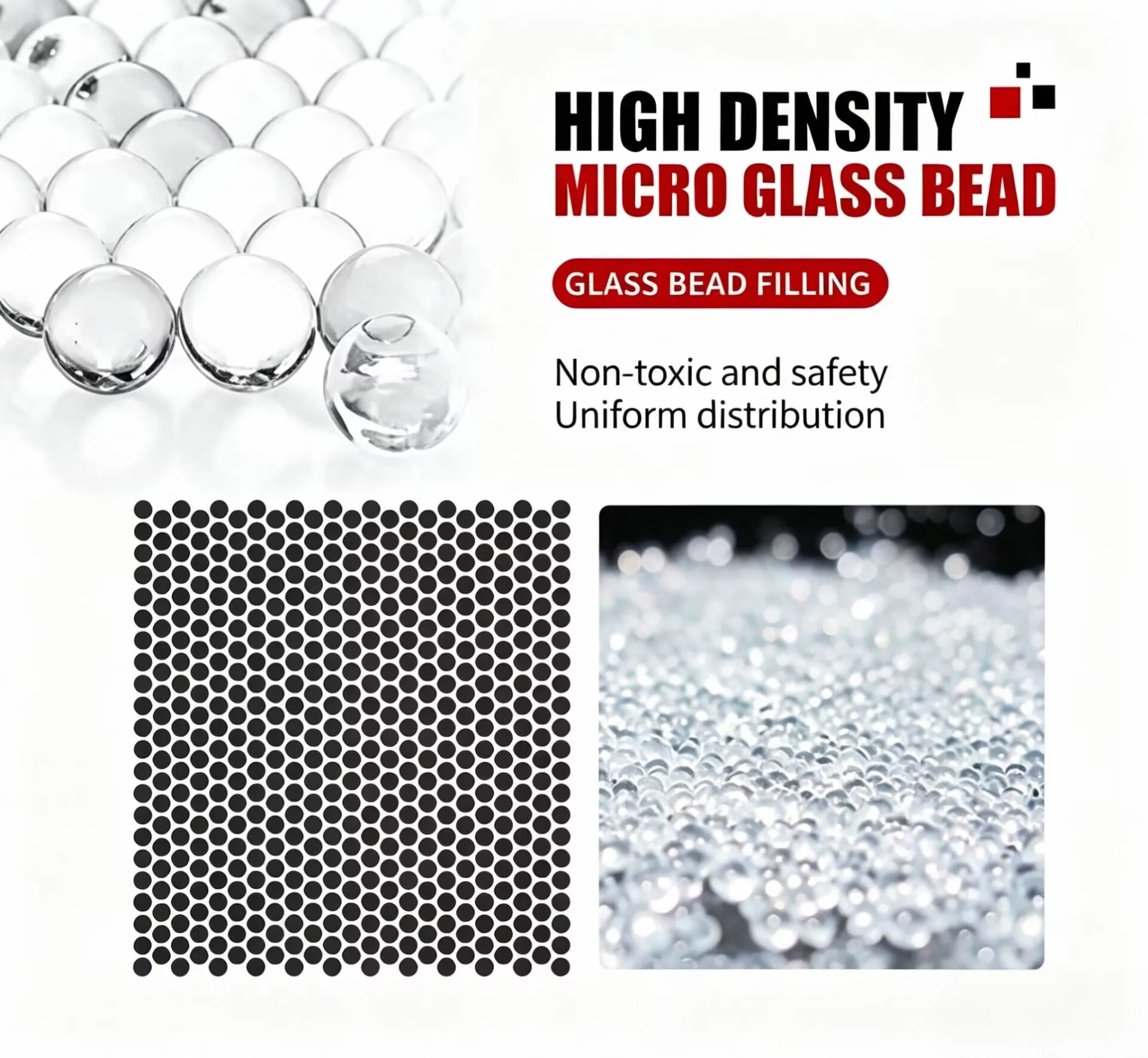
A weighted blanket is usually filled with small glass beads, separated into many quilted compartments.
The purpose of these compartments is not only to create the quilted look.
They also help keep the filling where it should be.
Looking at weighted blankets currently sold in the market, you can find many different pocket sizes.
Some products use 3×3 inch or 4×4 inch pockets, while others use 5×5 inch or even 6×6 inch compartments. Some European products also use 10×10 cm pockets.
These constructions can all be found in real products.
But there is a simple difference:
The larger the compartment, the more room the glass beads have to move inside it.
Our 5×5 cm compartments are approximately 2×2 inches, so they are considerably smaller than many 4×4, 5×5 or 6×6 inch designs.
The smaller pocket gives the beads less room to move around.
2. Why Can Larger Pockets Cause Problems?
Imagine putting a handful of small glass beads into a large fabric pocket.
When the blanket is flat, the beads may look evenly distributed.
But after the blanket is folded, carried, washed or used repeatedly, the beads can move toward one side of the pocket.
Over time, some areas may have more beads while another part of the same compartment has very little.
This can make the weight feel less evenly distributed.
A smaller compartment limits this movement.
The beads still have some room to move, but they cannot travel as far inside each individual pocket.
This is especially important for a weighted blanket because the goal is not simply to reach a total weight.
The weight also needs to be distributed across the whole blanket.
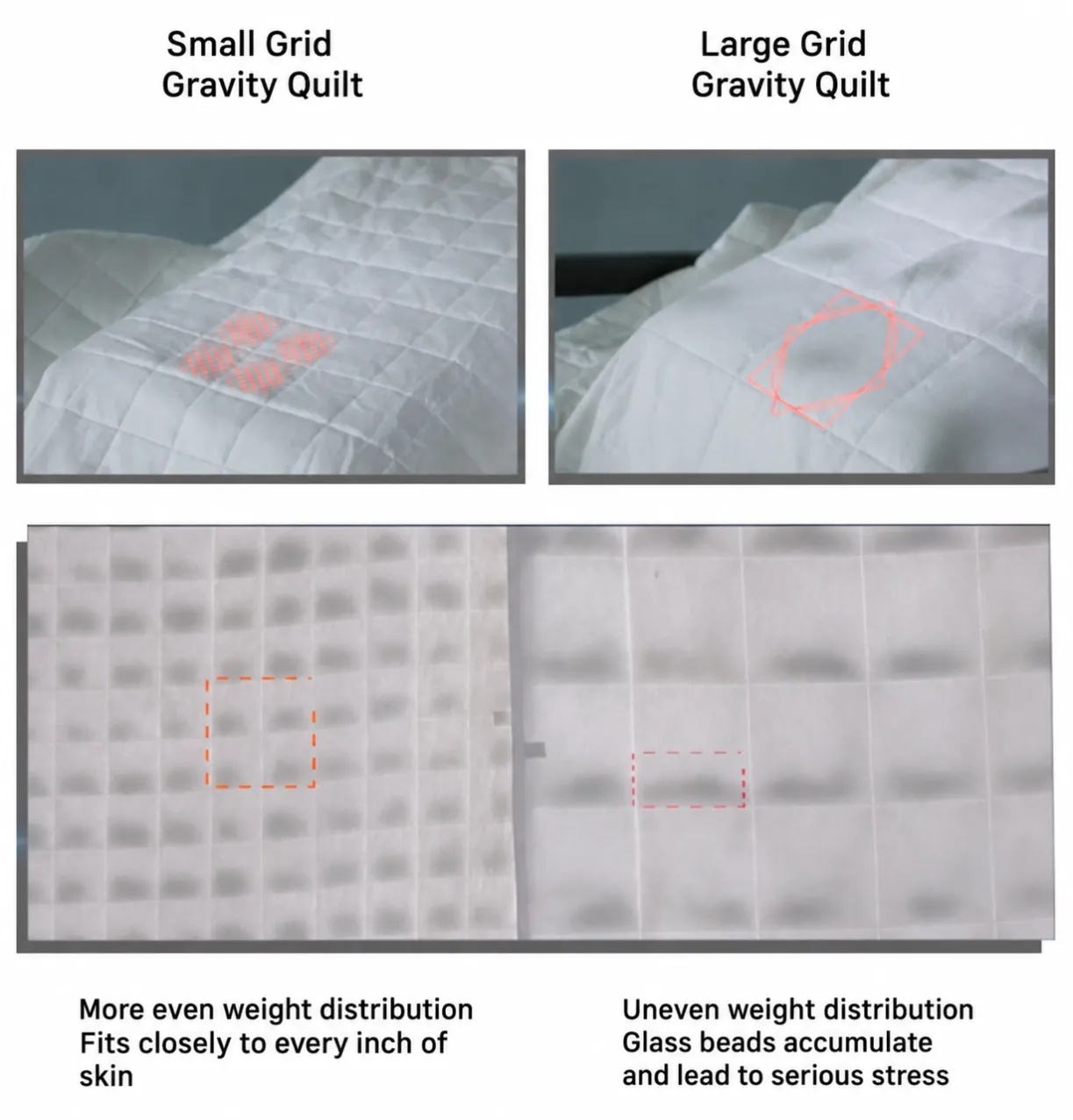
3. 5×5 cm Helps Keep the Weight More Evenly Distributed
Let's say a blanket weighs 7 kg.
It is easy to think that the most important thing is simply making sure the finished blanket weighs 7 kg.
But from a product-development point of view, that is only part of the job.
Where those 7 kg are distributed also matters.
With smaller 5×5 cm compartments, the glass beads are divided into many small sections across the blanket.
This helps reduce large movements of the filling and supports a more consistent distribution of weight from one area to another.
This is also why some weighted blanket brands have moved toward smaller pocket designs.
For example, some clients moving from an earlier 8×8 inch construction to 5×5 inch and later to a 2×2 inch design, specifically linking the smaller compartments with reduced weight shifting and more consistent distribution.
So smaller quilting is not simply about making the blanket look more detailed.
It has a practical production purpose.
4. Smaller Does Not Automatically Mean Better
Of course, quilting size is not the only factor that determines the quality of a weighted blanket.
The fabric needs to be suitable for containing the filling.
The inner layers need to be constructed properly.
The stitching needs to be consistent.
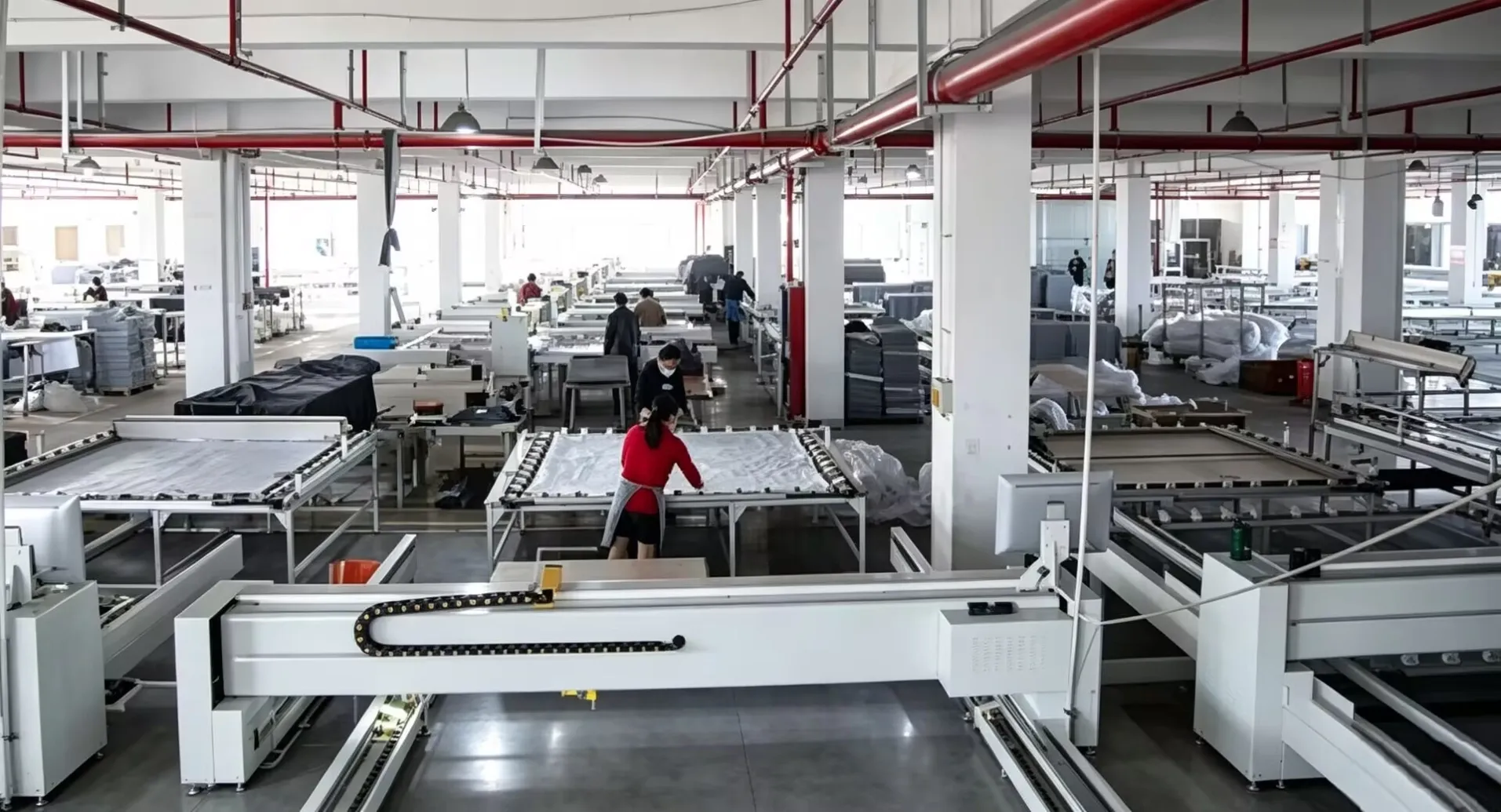
The glass beads need to be distributed correctly during production.
And the finished blanket needs to pass quality checks before shipment.
A 5×5 cm compartment cannot fix poor fabric or poor sewing.
But when the rest of the construction is done properly, using smaller compartments can give the glass beads less room to shift.
That is one reason we prefer this construction for our weighted blankets.
5. A Small Detail Buyers Should Check
When developing a weighted blanket, buyers often ask about:
- Total weight
- Blanket size
- Fabric
- Filling
- Color
- Packaging
- MOQ
These are all important.
But we also recommend asking about the quilting compartment size.
For example:
How large is each compartment?
How are the glass beads distributed inside?
What happens to the filling after repeated movement or washing?
These questions can tell you more about the actual construction of the product.
A blanket with a beautiful fabric and good packaging can still have problems if the filling is not properly controlled.
For B2B buyers, this is especially important because the same construction needs to be repeated across production orders, not just look good on one sample.
5×5 cm Is a Small Detail — But It Matters
There is no single quilting size that every weighted blanket must use.
Different brands and products use different constructions.
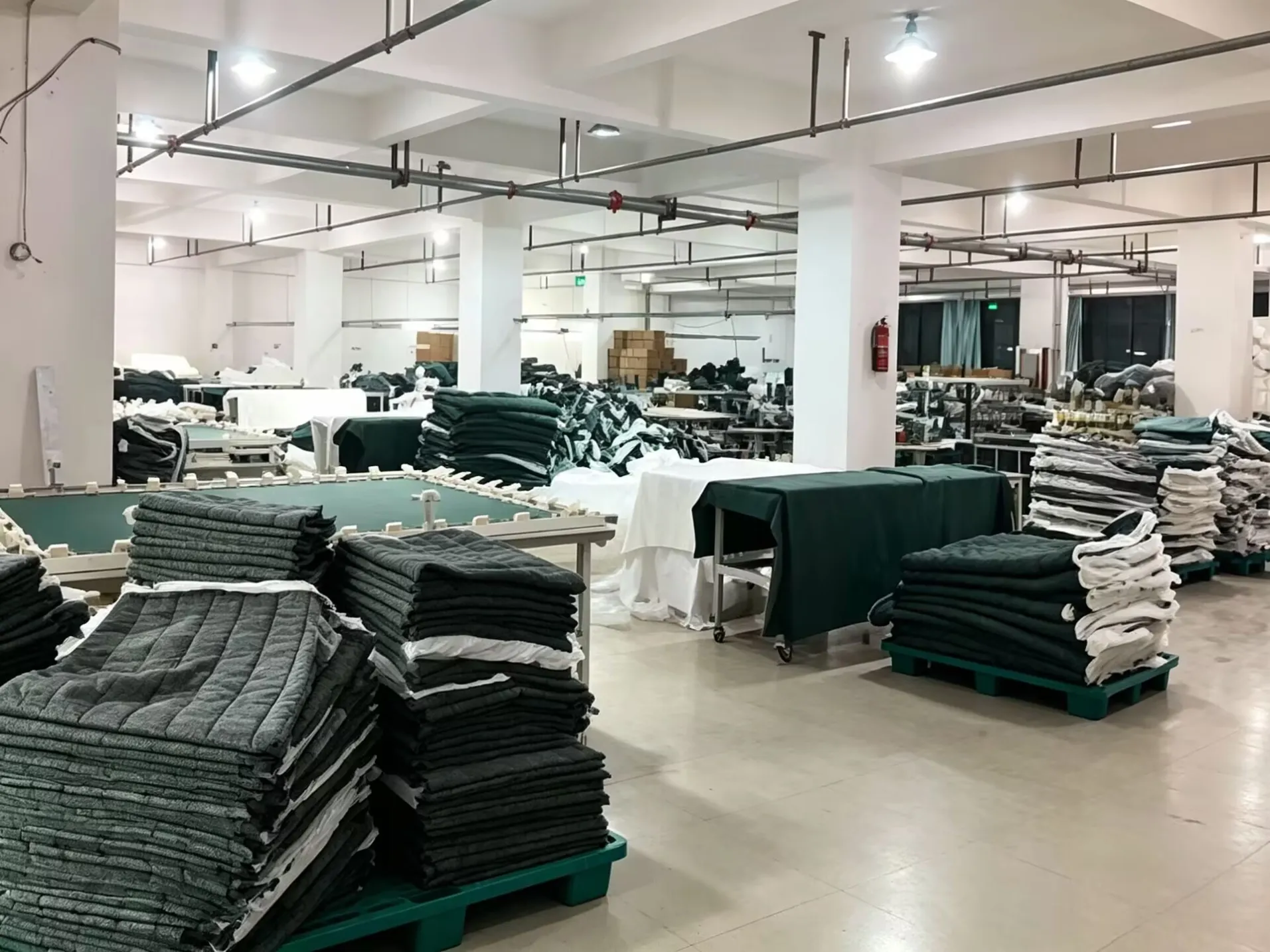
But from our production experience, we prefer 5×5 cm compartments because the smaller pockets give the glass beads less room to move.
This helps keep the filling more controlled and supports more even weight distribution across the blanket.
For a weighted blanket, details like this are easy to overlook.
But sometimes, the small details inside the product are what make a difference after months of use.
If you are developing a private-label weighted blanket and have specific requirements for quilting size, fabric, weight, filling or packaging, we can discuss the construction with you before sampling.
More related pages:
📩 Send us your project needs or specifications, and we will respond with a clear quotation and production suggestion within 24 hours.
Email: info@hengmy.com