Sep 9, 2026Weighted Blankets
How Is a Weighted Blanket Made?
Learn how weighted blankets are made, from fabric and filling to quilting, weight distribution, quality control and packaging. Practical advice for brands and B2B buyers.

How Is a Weighted Blanket Made? A Practical Guide for B2B Buyers
There is a soft fabric on the outside, some filling inside, and a certain amount of weight.
But if you are developing a weighted blanket for your brand, you will quickly find that the production process is not as simple as it looks.
Fabric selection, filling, quilting, weight distribution, sewing, quality control and packaging all affect the final product.
For brands, wholesalers and retailers, understanding these details can help you ask better questions when working with a manufacturer.
Here is a practical look at how a weighted blanket is made.
1. Choosing the right fabric
Fabric is usually one of the first decisions when developing a weighted blanket.
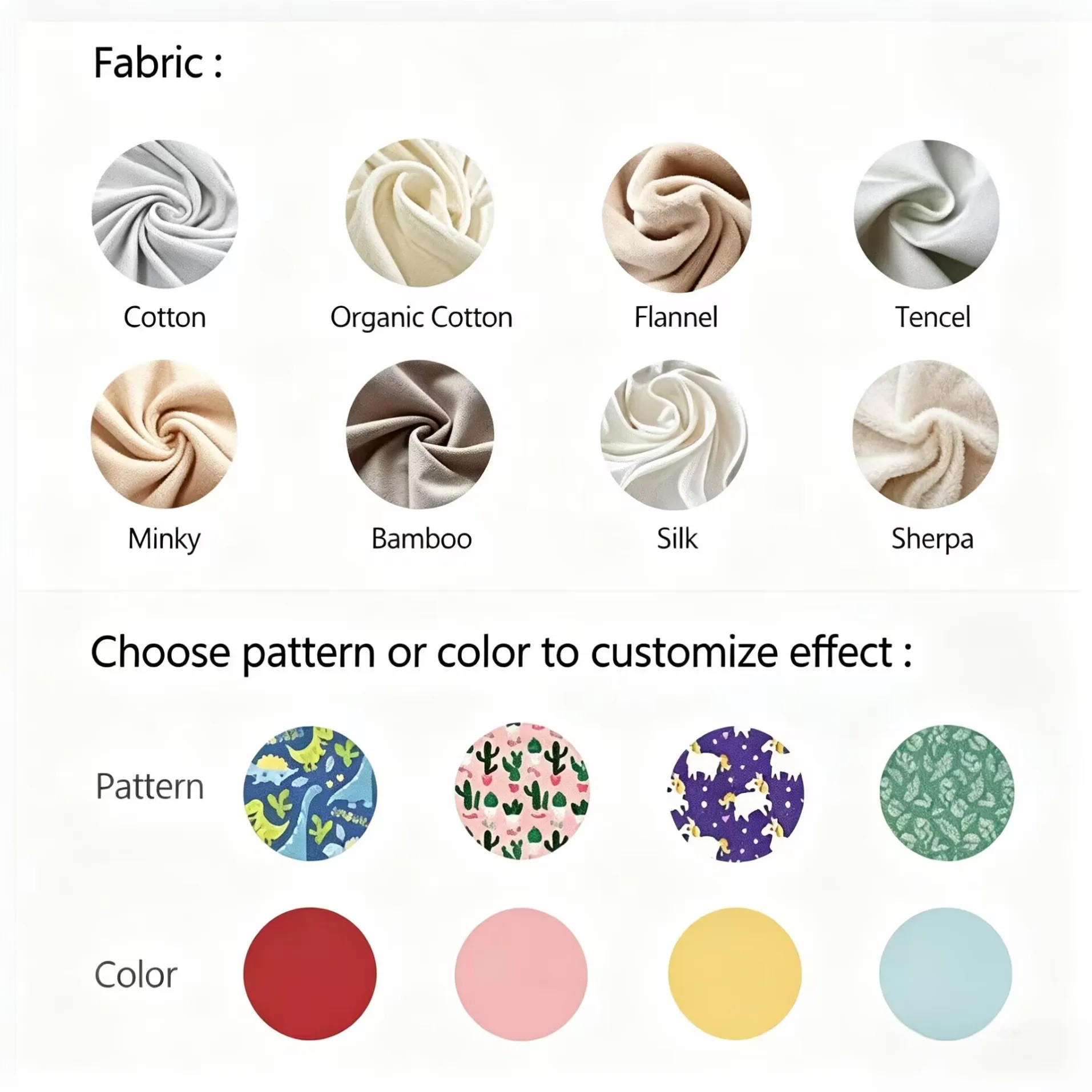
Cotton is a common choice because it has a familiar, natural hand feel and works well for products positioned around sleep and comfort.
Microfiber is also widely used, especially for products where price competitiveness is important. It can offer a soft hand feel while keeping the overall product cost under control.
For colder seasons or products positioned around warmth and softness, minky or similar plush fabrics can be considered.
Some brands also choose bamboo-based or blended fabrics when they want to create a different fabric story for their target market.
There is no single fabric that works for every weighted blanket.
The right choice depends on the target market, season, retail price, product positioning and the overall brand concept.
This is why I usually recommend deciding the fabric together with the product positioning, rather than choosing it only based on the lowest price.
2. Selecting the filling and target weight
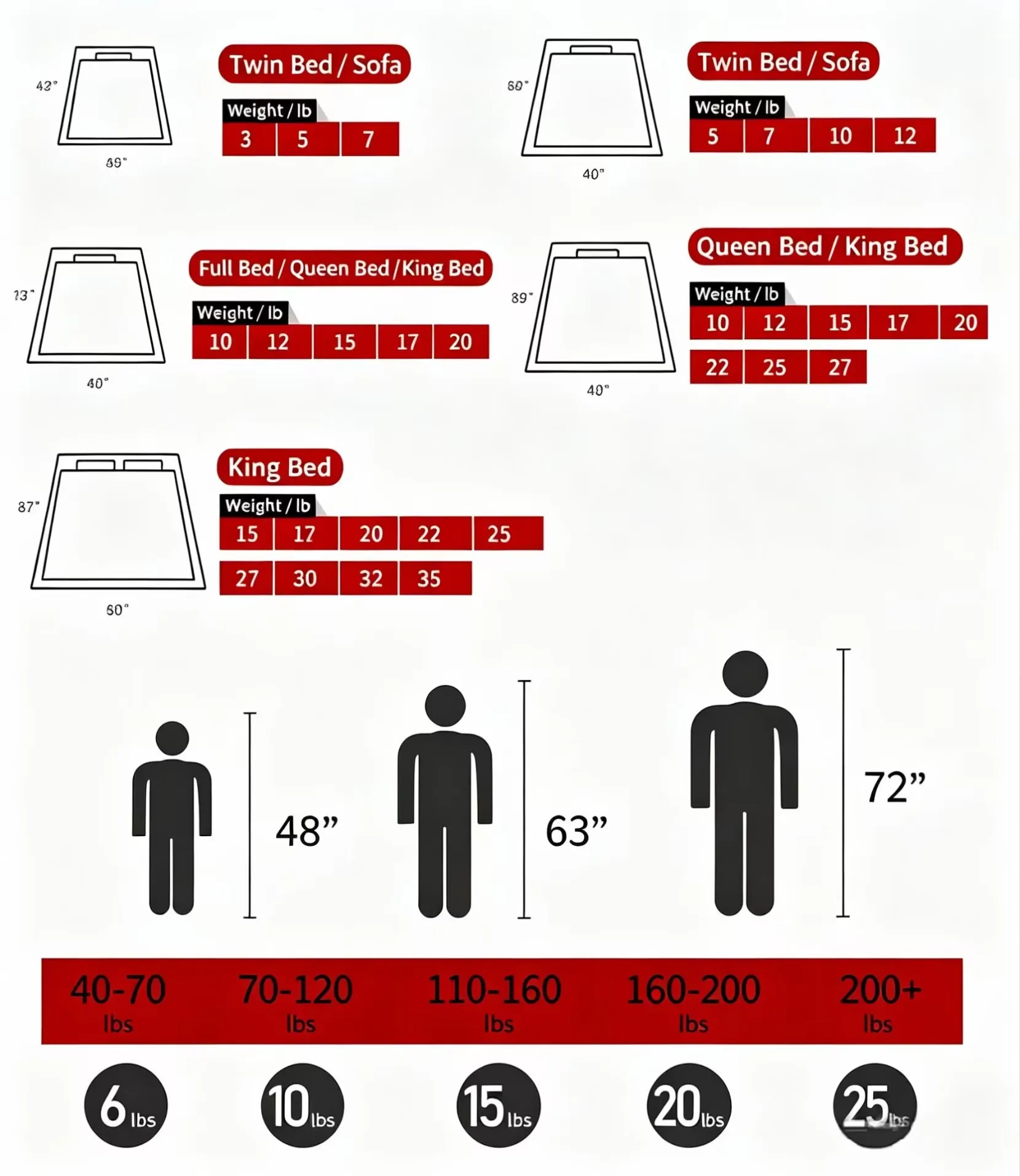
The filling is what gives a weighted blanket its weight, but the total weight is only one part of the development process.
The size of the blanket, filling material, filling amount and construction all need to work together.
For example, a weighted blanket designed for the European market may have different size and weight requirements from one designed for the USA or Australia/New Zealand.
This is especially important for B2B buyers developing a private-label product.
Instead of starting with:
“I need a 7 kg weighted blanket.”
It is often better to start with:
“Who is this product for, what size do I need, and what kind of product do I want to create?”
Then the appropriate weight and filling specification can be discussed.
In other words, product development should start from the market and customer, not only from a number on a quotation sheet.
3. Quilting keeps the filling in place
Quilting is one of the most important parts of weighted blanket construction.
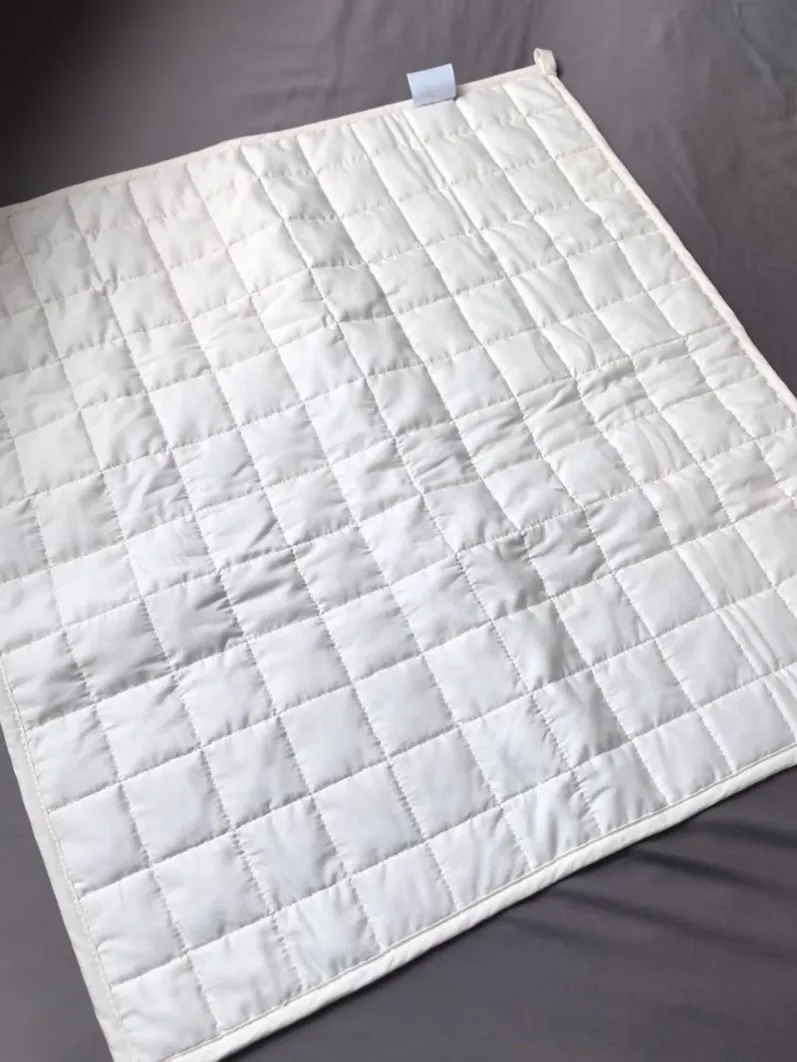
A weighted blanket is normally divided into many smaller sections. The filling is placed inside these sections and the layers are then quilted together.
The purpose is not only to make the blanket look neat.
The quilting helps control the movement of the filling and supports more consistent weight distribution across the blanket.
For example, a smaller grid can help reduce how far the filling can move inside the blanket.
The exact grid size can vary depending on the product design, filling and production requirements.
This is also an area where buyers should look beyond the appearance of a sample.
Two blankets may look similar in a product photo, but their internal construction can be different.
4. Why weight distribution matters
Imagine buying a weighted blanket with the correct total weight, but after some movement, most of the filling gathers in certain areas.
The total weight has not changed.
But the blanket may not feel the same.
This is why filling distribution is an important part of production control.
Larger blankets can require more attention because there is a larger surface area where the filling needs to remain reasonably consistent.
The filling process, quilting construction and production equipment all play a role here.
For B2B buyers, this is one reason why it is useful to understand how a manufacturer actually produces the blanket, instead of judging a supplier only from one sample.
A good sample is important.
But consistency across a production order is even more important.
5. Sewing and quilting need to be consistent
Once the filling and layers are prepared, the blanket needs to be sewn and quilted according to the agreed construction.
Stitching affects both the appearance and durability of the finished product.
The stitching should be consistent from one section to another, and the finished blanket should match the approved sample in dimensions and workmanship.
This becomes even more important for private-label projects.
A buyer may approve one sample with a specific fabric, grid size, label position and packaging specification.
The production order should follow the same specification.
This sounds obvious, but in real B2B sourcing, the difference between a good sample and consistent bulk production is something buyers should pay attention to.
6. Quality control should not wait until the end
Quality inspection should not only happen after the entire order has been completed.
During production, manufacturers should pay attention to important points such as:
- Overall weight
- Filling distribution
- Blanket dimensions
- Fabric appearance
- Stitching and quilting
- Labels and workmanship
- Packaging requirements
For customized weighted blankets, production checks are especially important because the specification may be different from a standard product.
The goal is quite simple:
The bulk production should match the approved sample and agreed specifications.
This is much more useful than simply saying that a product has been “quality checked.”
For buyers, it is worth asking what is actually checked and at which stage of production.
7. Packaging is also part of product development
The production process does not really end when the blanket is sewn.
Packaging should also be considered during product development.
Depending on the market and retail positioning, a weighted blanket may be packed in a fabric bag, custom retail packaging or other packaging designed for the brand.
For private-label products, packaging can include custom labels, instruction cards, hangtags and other brand elements.
But packaging is not only about appearance.
Weighted blankets are relatively bulky products, so packed volume can also affect storage, handling and international shipping.
A packaging solution that looks good but takes up unnecessary space may increase the overall logistics cost.
For this reason, I prefer to discuss packaging together with the product, rather than treating it as the last step before shipment.
A weighted blanket is more than its weight
When developing a weighted blanket, it is easy to focus on one question:
“How many kilograms?”
But the weight is only one part of the product.
Fabric, filling, blanket size, quilting, weight distribution, sewing, quality control and packaging all work together.
This is also why the lowest quotation is not always the best starting point for a new weighted blanket project.
A small difference in material or construction may affect the final product, packaging volume or production consistency.
For brands, wholesalers and retailers, a better conversation with a manufacturer can start with a few simple questions:
What filling do you recommend for this product?
How is the weight distributed?
What quilting construction do you use?
How do you control consistency during bulk production?
How will the blanket be packed for international shipping?
These questions can tell you much more about a supplier than simply asking for a unit price.
If you are developing a new weighted blanket, private-label collection or OEM/ODM project, you are welcome to send me your target size, weight, fabric preference and estimated quantity.
I can help you discuss the product structure and production options first, before moving to the quotation.
Sometimes, the best way to compare suppliers is not to ask only “What is your price?”
Start by asking: “How is this weighted blanket made?”
📩 Send us your project needs or specifications, and we will respond with a clear quotation and production suggestion within 24 hours.
Email: info@hengmy.com