Oct 7, 2026Weighted Blankets
How Does Filling Material Affect Weighted Blanket Thickness?
Learn why weighted blankets with the same total weight can have different thicknesses, and how filling density, volume and pocket construction affect the final product.
How Does Filling Material Affect Weighted Blanket Thickness?
Two weighted blankets can have the same total weight but look and feel quite different.
One may look relatively thin and flat, while another may look thicker and more bulky.
Why?
The answer is not only the total weight.
It also depends on how much space the filling takes up inside the blanket.
For product developers, this is an important point to understand:
Same weight does not always mean same filling volume.
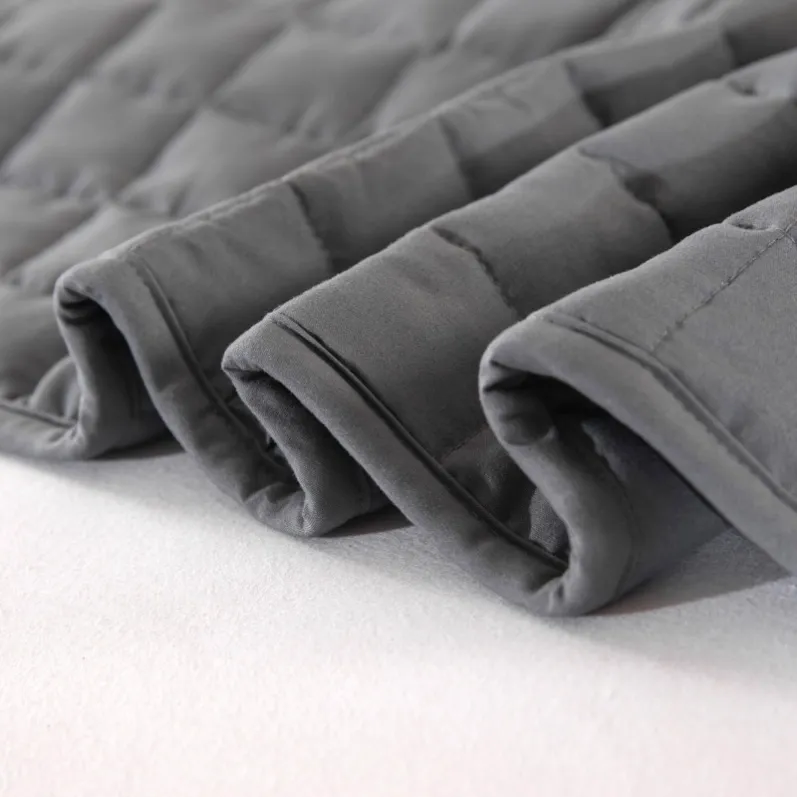
Weight and volume are not the same thing
When we talk about a weighted blanket, the finished weight tells us how heavy the product is.
But it does not tell us how much space the filling occupies
.
Different filling materials have different densities. A denser material can provide the same weight with less volume, while a less dense material may need more volume to reach the same target weight.
This is why two blankets with the same finished weight can have different thicknesses.
For example:
Same target weight → different filling volume → different blanket thickness
This is a basic physical difference, but it can have a noticeable effect on the finished product.
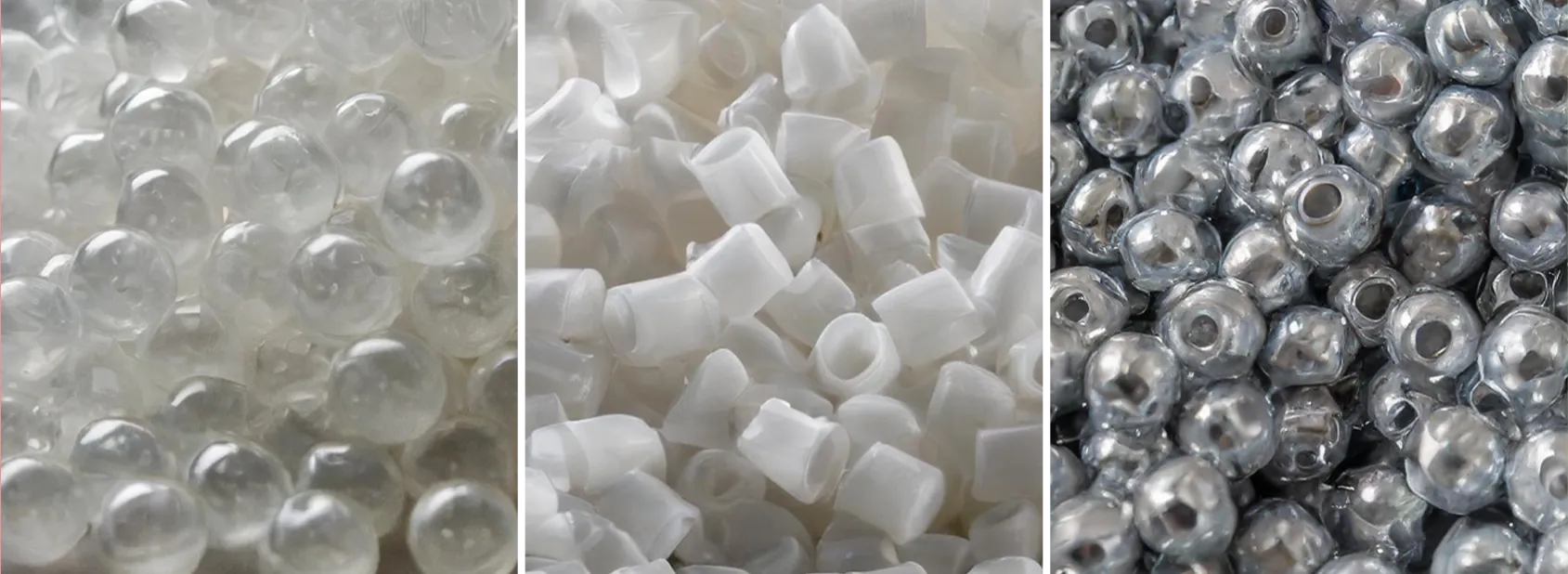
Glass beads can create a more compact filling layer
Glass microbeads are commonly used in weighted blankets because they are small and relatively dense.
Compared with typical plastic pellet filling, less volume may be needed to achieve the same target weight.
This can help keep the filling layer more compact.
That does not mean a glass-filled blanket will always be thin. The final thickness still depends on the fabric, inner layers, pocket size, quilting and total amount of filling.
But when the filling itself takes up less space, the manufacturer has more flexibility when developing the overall structure.
This is especially useful when a brand wants a weighted blanket that does not feel unnecessarily bulky.
Plastic pellets can need more space
Plastic pellets are generally larger and less dense than glass microbeads used for weighted blankets.
So, for the same finished weight, more filling volume may be required.
This extra volume has to go somewhere.
It may result in a thicker filling layer or a slightly fuller pocket structure.
This is why simply comparing the finished weight of two blankets is not enough when evaluating their construction.
A specification such as “7 kg” or “15 lb” tells you the total weight, but it does not tell you how that weight is distributed inside the blanket or how much space the filling occupies.
For B2B product development, this distinction is useful when discussing the desired finished thickness with a supplier.
Pocket construction also affects thickness
Filling material is only one part of the picture.
The way the filling is divided inside the blanket also affects the final appearance and feel.
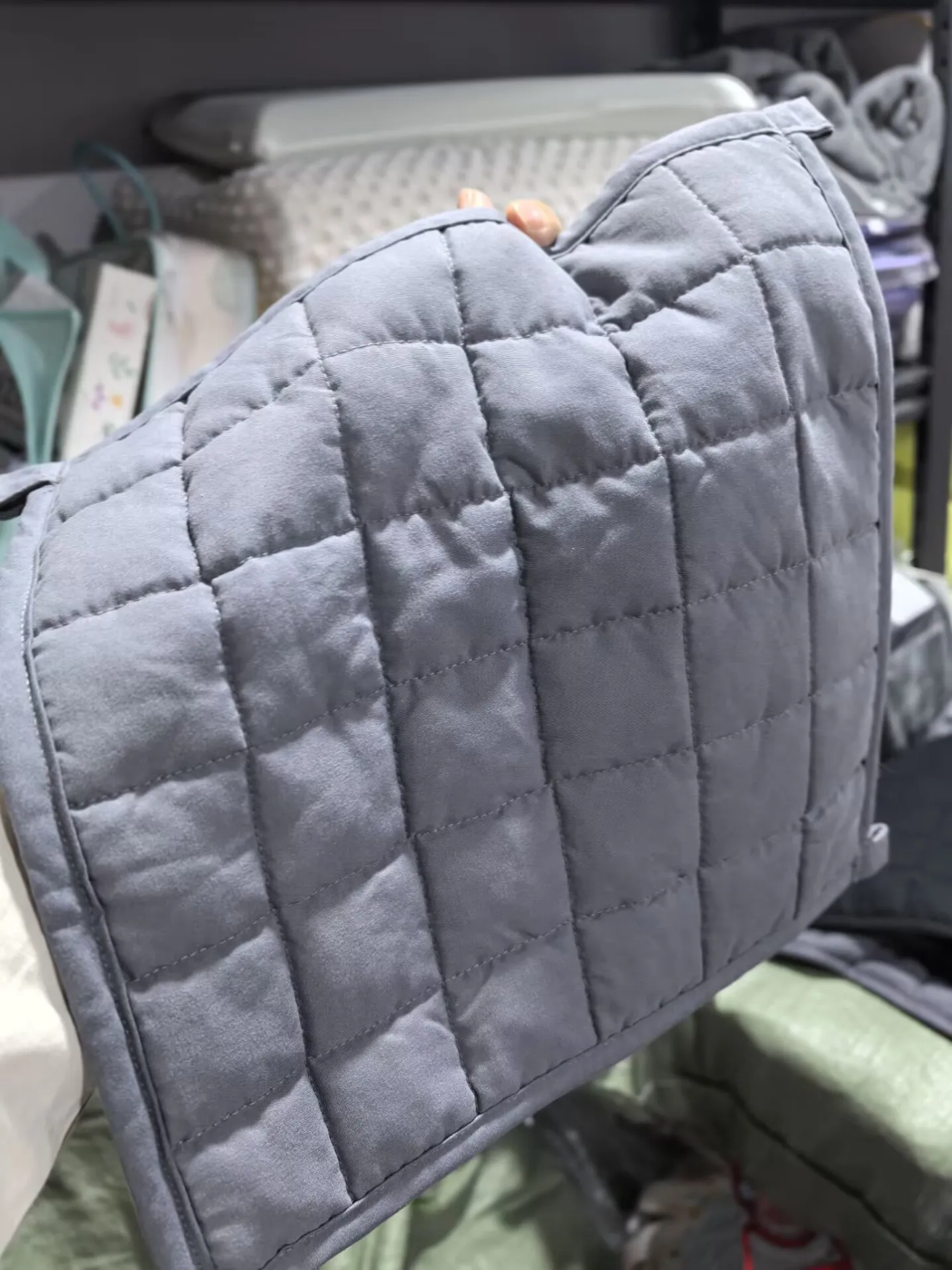
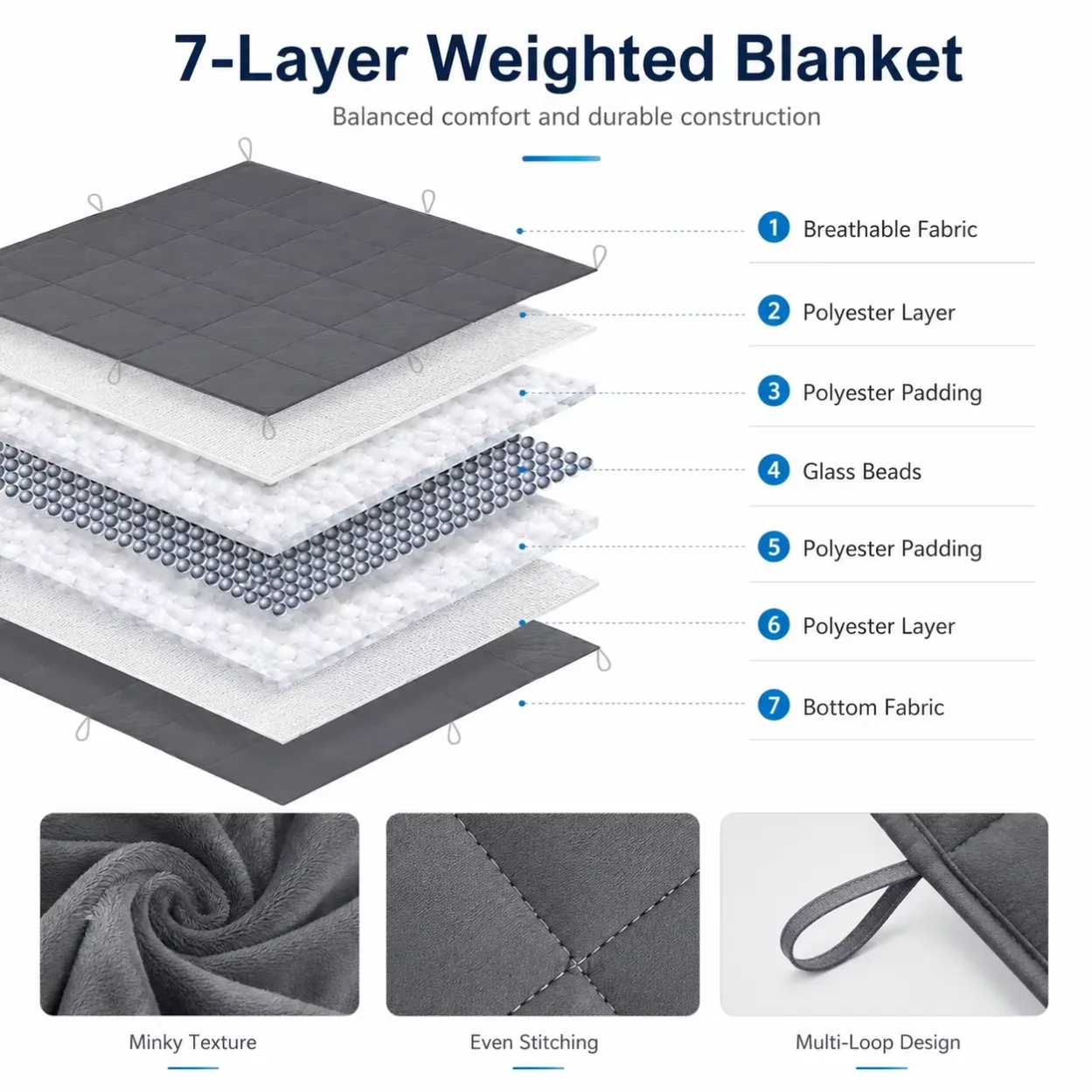
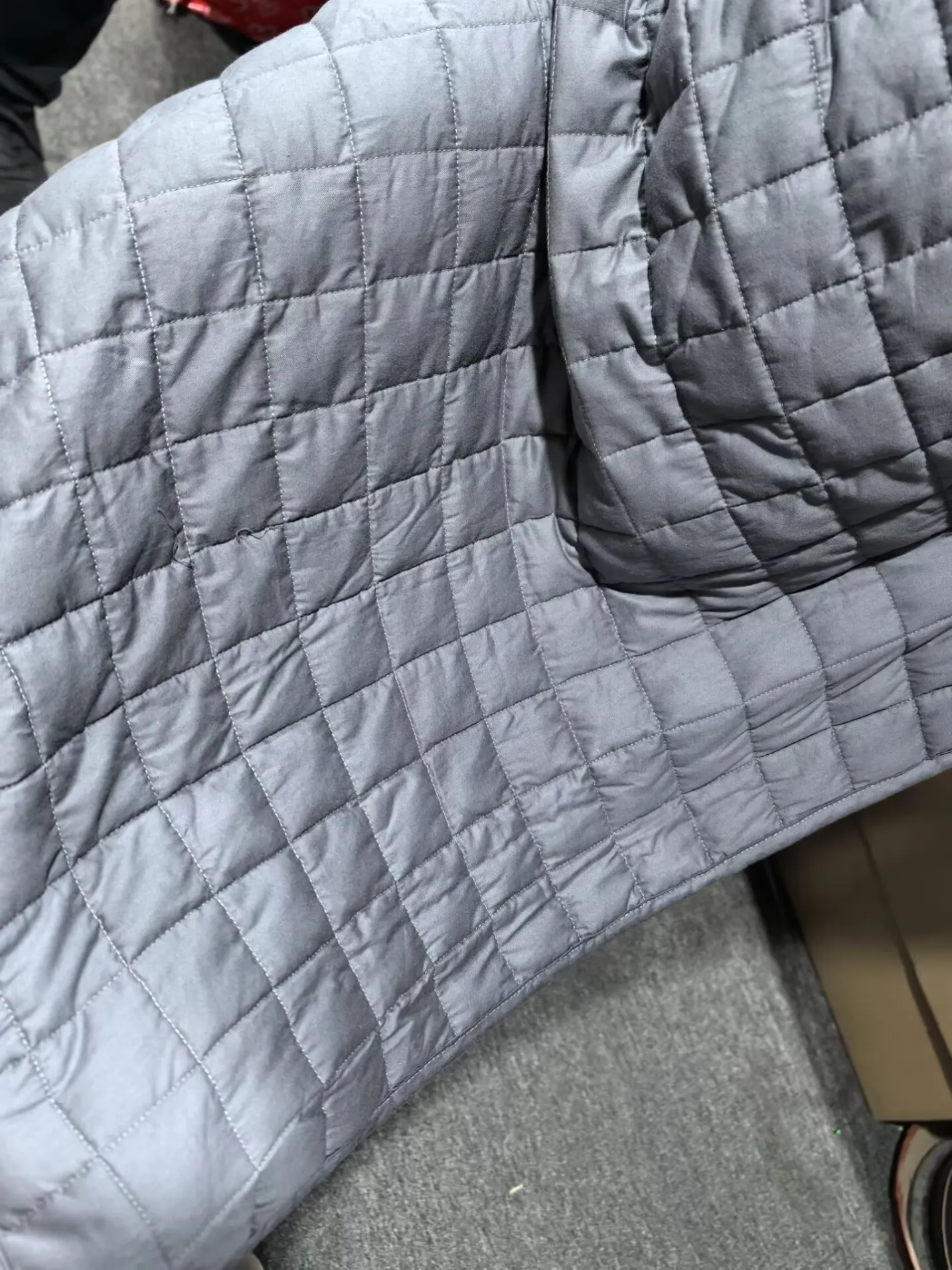
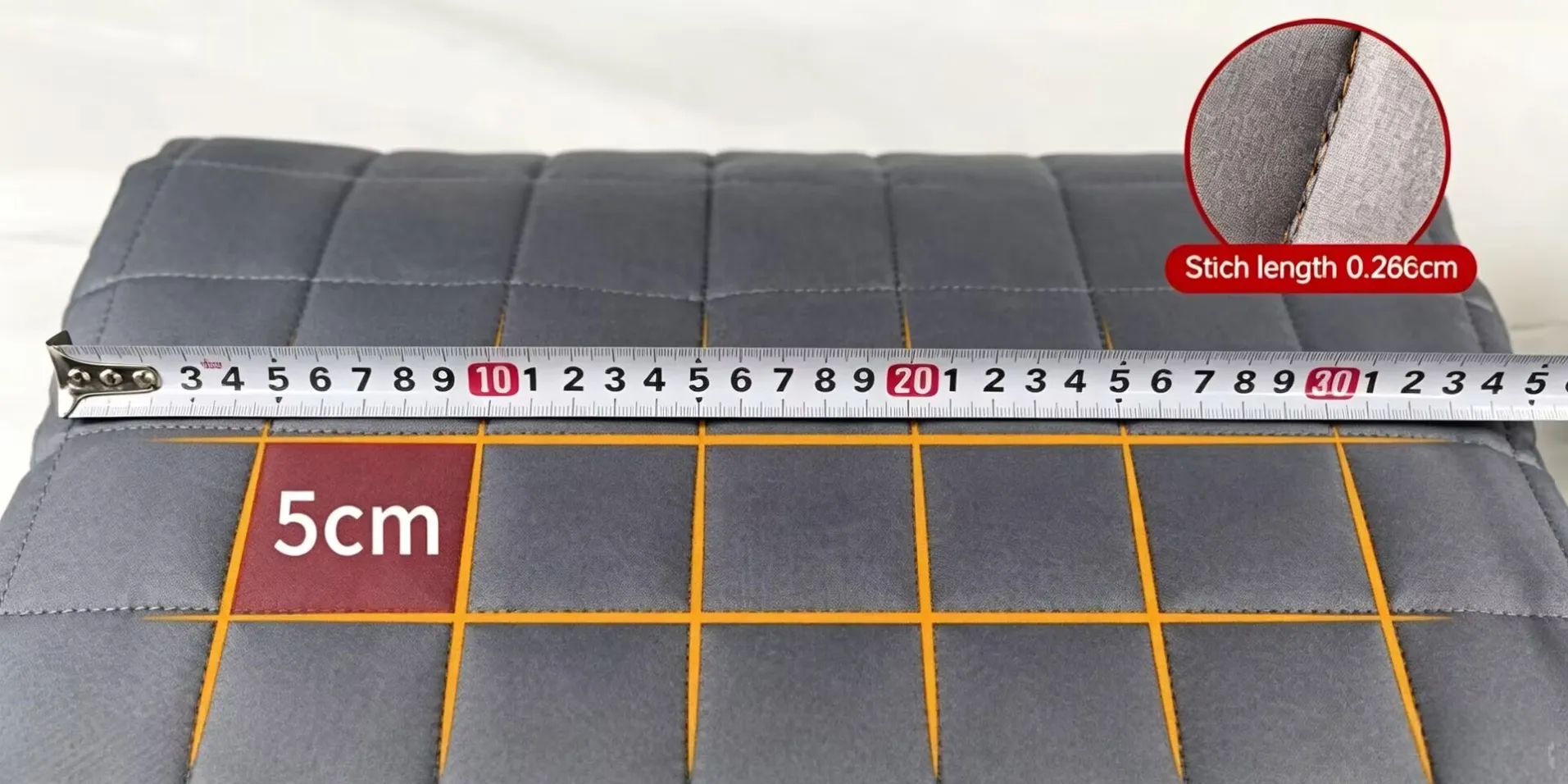
Weighted blankets are normally constructed with multiple quilted pockets. The filling is placed inside these sections rather than being left loose across the whole blanket.
Smaller pockets give the filling less room to move and can help create a more controlled structure.
Our product construction uses 5×5 cm quilting to keep the glass beads in smaller sections and help control bead movement. The smaller grid can also reduce the overall filling space compared with a larger grid using the same material, size and weight.
This is why thickness should not be discussed by looking at the filling material alone.
Filling + pocket size + quilting all work together.
The same weight can still produce different finished products
Imagine two weighted blankets with the same size and the same target weight.
If one uses a denser filling and the other uses a less dense filling, the amount of space needed inside the blanket can be different.
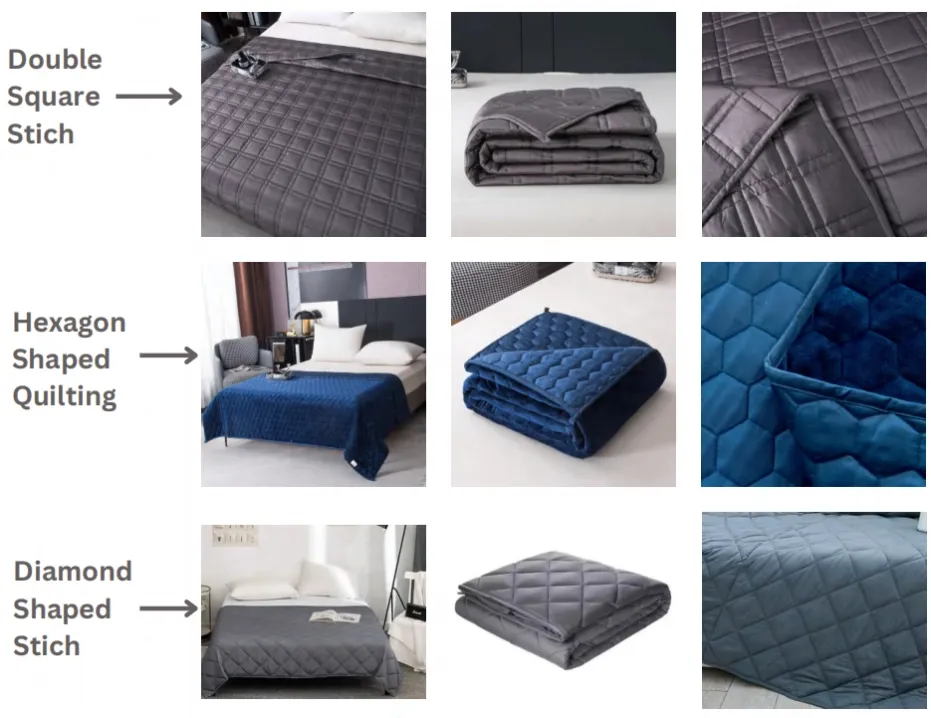
Then add different pocket sizes or quilting patterns, and the final products can look even more different.
This can affect:
- Overall blanket thickness
- Folded volume
- How the blanket drapes
- How much space the filling occupies inside each pocket
- The final hand feel
So when developing a new weighted blanket, it is better not to specify only the finished weight.
The filling material and construction should be discussed at the same time.
Thickness should be considered from the beginning
Sometimes a buyer may first decide:
“I want this blanket to weigh 8 kg.”
But that is only one part of the specification.
If the target product is also expected to be relatively thin and flexible, then the filling material becomes an important part of the development discussion.
The same applies when the product needs a particular folded size, pocket construction or outer fabric.
These decisions are connected.
A change in filling material can affect the amount of space needed inside the blanket, which can then affect the construction.
That is why it is better to discuss weight, filling, pocket size and quilting together before making the sample.
Conclusion
The key point is simple:
The same weight does not always mean the same thickness.
Different filling materials have different densities, so they can require different amounts of space to reach the same finished weight.
For weighted blankets, glass microbeads can provide a relatively compact filling layer, while larger plastic pellets may require more volume.
But filling material is only one part of the final result.
Filling material + filling volume + pocket size + quilting + fabric all influence the finished construction.
If you are developing a private label weighted blanket and already know your target size and weight, send us those basic details. We can discuss the filling and pocket construction together before sampling.
More related pages:
📩 Send us your project needs or specifications, and we will respond with a clear quotation and production suggestion within 24 hours.
Email: info@hengmy.com