Oct 4, 2026Weighted Blankets
Glass Beads vs Plastic Pellets in Weighted Blankets
Glass beads and plastic pellets can create very different weighted blankets. Learn how filling affects thickness, feel, noise, distribution, cost and product positioning.
Glass Beads vs Plastic Pellets in Weighted Blankets
When developing a weighted blanket, the filling material is one of the first details to decide.
Two common options are glass beads and plastic pellets.
They can both add weight to a blanket, but they do not create exactly the same product.
For brands and wholesalers, the choice can affect the blanket’s thickness, hand feel, weight distribution, noise level, production cost and final market position.
So, which one is better?
There is no single answer. It depends on the product you want to develop.
Glass beads are smaller and more compact
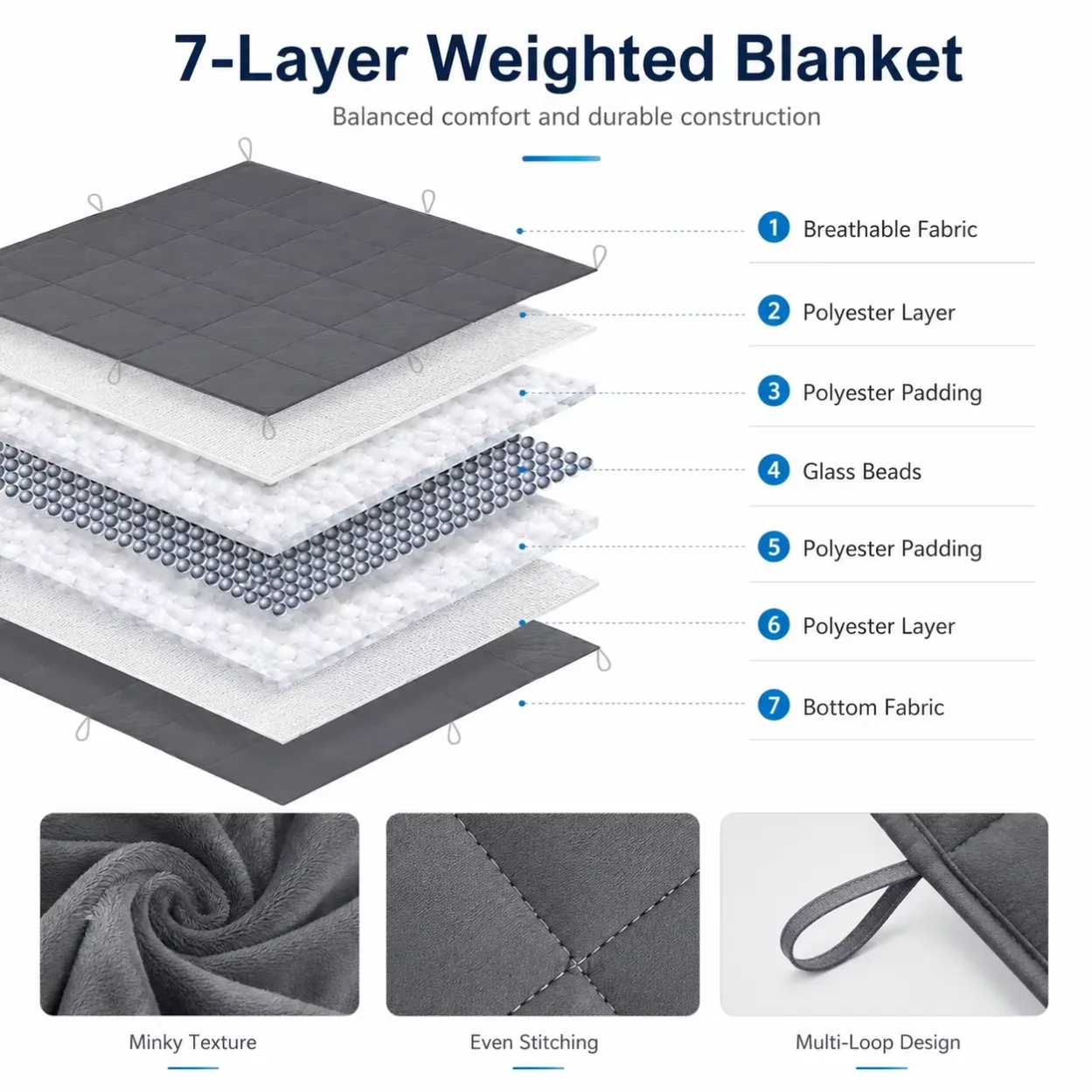
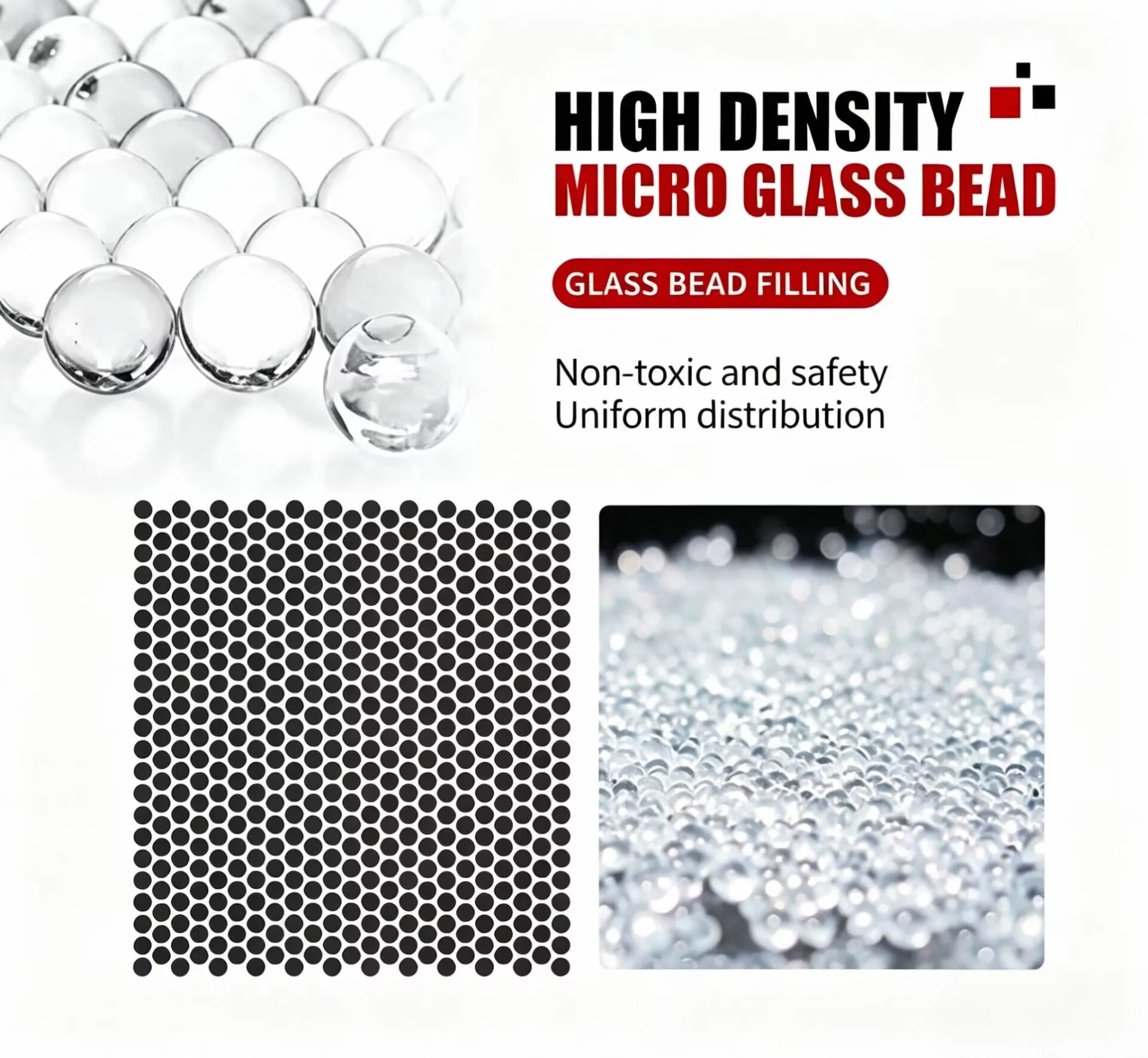
Glass beads are generally much finer than plastic pellets. Their higher density means less filling volume is needed to reach the same total weight. This is one reason glass-filled weighted blankets can have a thinner, flatter profile.
For example, our weighted blanket construction uses glass beads inside the quilted structure. The product brochure also shows different finished sizes and weights for different markets, rather than using one fixed specification for every customer.
This is important when developing a private label product.
The same 7 kg blanket does not necessarily have the same thickness or feel when different filling materials are used.
Plastic pellets usually need more volume
Plastic pellets are larger and less dense than glass beads. As a result, more volume of plastic filling is needed to reach the same weight. A weighted blanket using plastic pellets can therefore feel bulkier than a similar-weight blanket using glass beads.
This does not automatically mean plastic pellets are a bad choice.
For some products, a slightly thicker and more substantial feel may be acceptable. Cost can also be an important consideration, as plastic pellets are generally a lower-cost filling option than glass.
The key is to match the filling with the product positioning.
The hand feel can be different
Glass beads are very fine and smooth. Plastic pellets are larger, so the filling can feel different when you move or handle the blanket.
This difference becomes more noticeable when the blanket is lifted, folded or moved.
Micro glass beads are finer and smoother than plastic pellet fillings, while plastic pellets can be more noticeable when they move. For a brand developing a more refined weighted blanket, this is worth considering together with the fabric and quilting construction.
Noise is another detail buyers notice
A weighted blanket is not completely still during use.
People move, turn the blanket over, fold it and pull it closer. The filling moves inside the quilted pockets as well.
Because glass beads are fine and smooth, they generally create less noticeable movement noise. Larger plastic pellets can produce more rustling when they move.
This does not mean every plastic-filled blanket will be noisy. The final result also depends on the pocket construction, fabric and how the filling is contained.
Filling also affects weight distribution
The filling material is only one part of the equation.
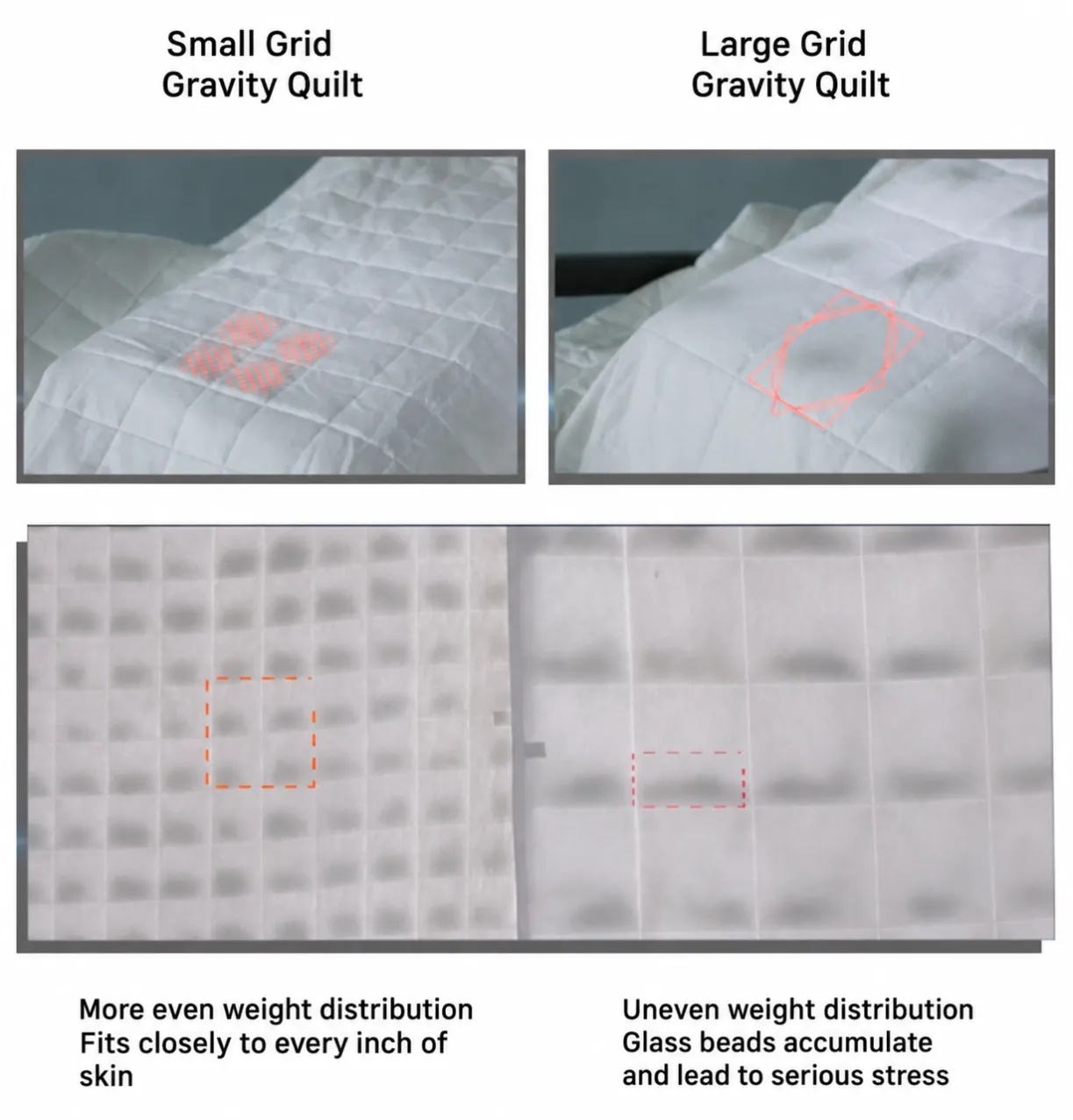
A good weighted blanket also needs a construction that keeps the filling reasonably distributed.
Our own product construction uses 5×5 cm quilting to create small compartments for the glass beads. The brochure describes this construction as helping reduce bead shifting and uneven weight distribution.
This is why I would not recommend choosing the filling material separately from the quilting design.
Glass beads + suitable pocket construction need to be considered together.
Which filling is right for your product?
For many mid-range and premium weighted blankets, glass beads are attractive because they can provide a thinner profile, fine hand feel and relatively quiet movement.
Plastic pellets can make sense when cost, availability or a particular product feel is more important.
The right question is therefore not simply:
“Which filling is better?”
A better question is:
“Which filling is right for this product?”
Before developing a private label weighted blanket, I would suggest discussing the filling material, blanket size, finished weight and pocket construction together.
These details affect each other.
Filling selection also ties into the finished blanket’s care instructions.
If you already have a target size, weight or fabric in mind, send us the specifications.
We can discuss the filling and construction together and see what kind of weighted blanket would make sense for your market.
More related pages:
📩 Send us your project needs or specifications, and we will respond with a clear quotation and production suggestion within 24 hours.
Email: info@hengmy.com