Sep 30, 2026Weighted Blankets
Knitted vs Woven Pillow Covers for Memory Foam Pillows | Best Sleep Factory
Confused between knitted and woven memory foam pillow covers? Learn fabric stretch, fit differences for private label pillows. Send us your specs for custom sampling.
What Is the Difference Between Knitted and Woven Pillow Covers for Memory Foam Pillows?
When developing a private label memory foam pillow, most buyers immediately focus on the quality and density of the foam core. However, the pillow cover is equally critical to the final product’s fit, comfort and customer satisfaction.
A common question we run into during custom development:
Should we choose knitted fabric or woven fabric for memory foam pillow covers?
This topic came up recently with one of our European private label clients.
They asked us to source custom fabric for their pillow line. The fabric supplier we connected with only offered woven material.
We quickly identified a key limitation: standard woven fabric, the same material used for bed sheet sets, has almost no inherent stretch.
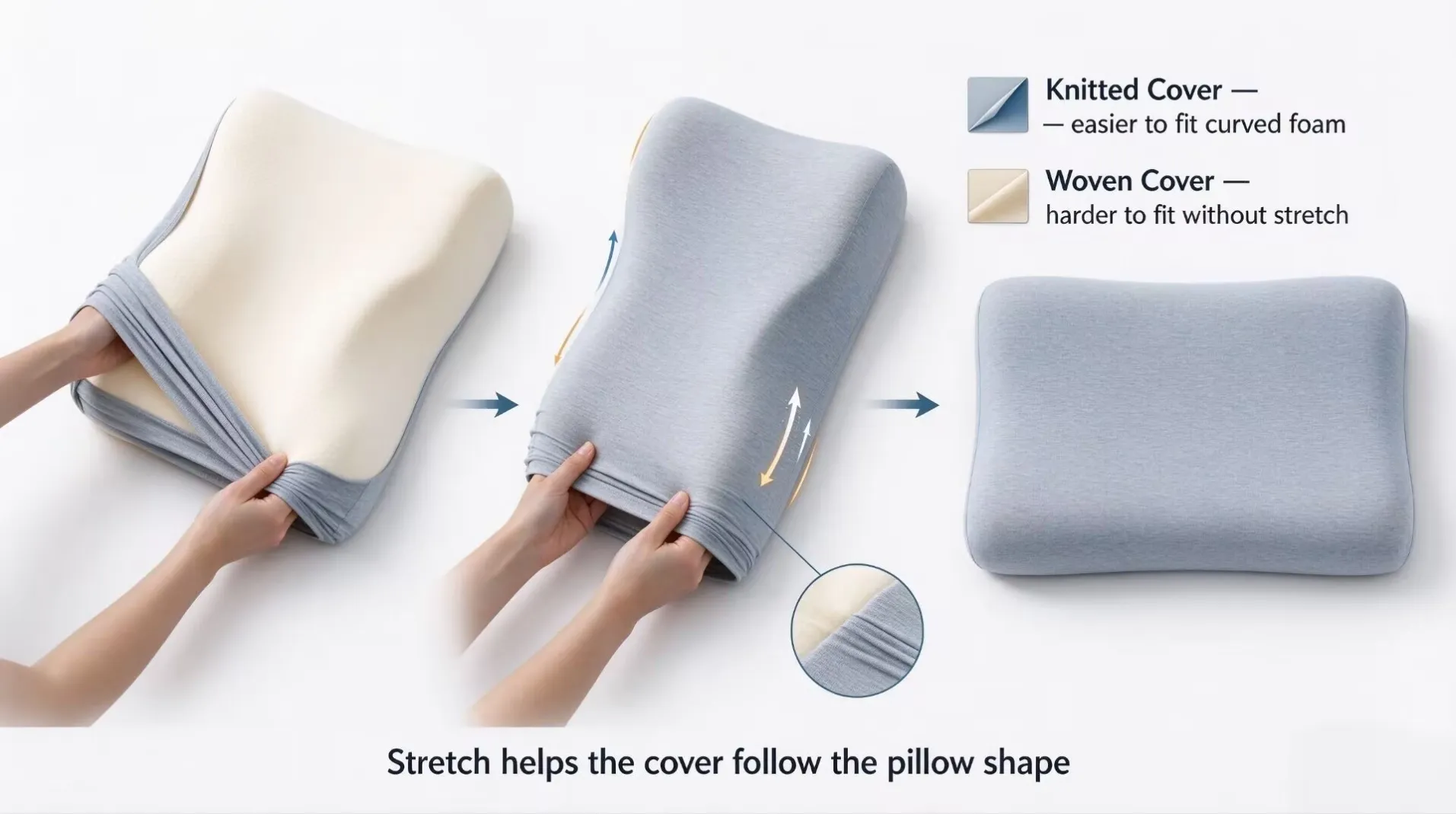
For contoured, butterfly or curved memory foam pillows, a non-stretch woven cover can be extremely difficult to fit over the foam.
This real-world example shows why fabric selection cannot be based on fabric name alone. There is no universal “better” option. The right fabric depends on your pillow shape, required fit, hand feel, aesthetic goals and target budget.
Knitted vs Woven Pillow Covers: Core Fabric Construction
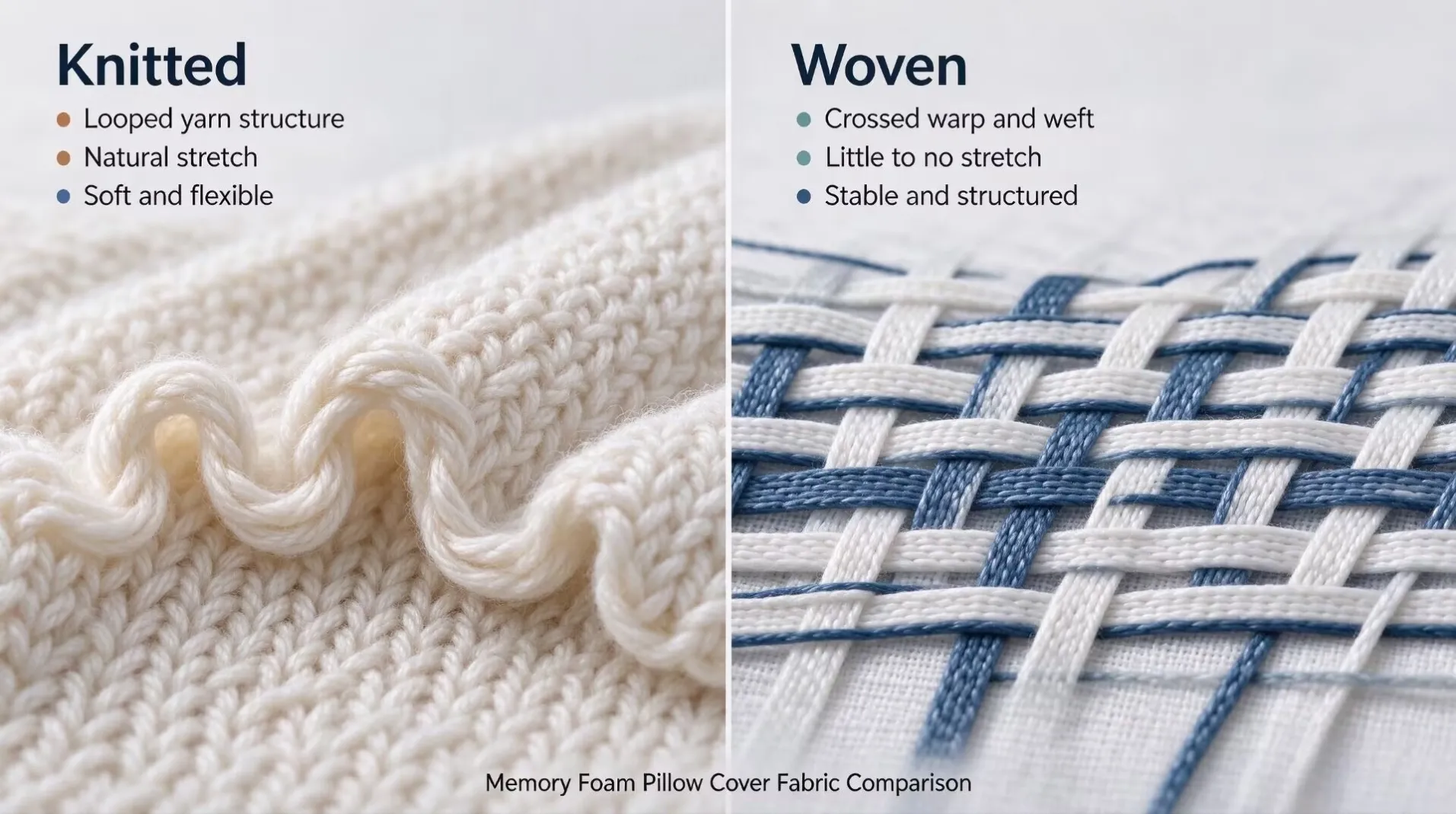
The fundamental difference between knitted and woven fabrics lies in how the yarns are assembled.
Knitted fabric is constructed by interlocking yarn loops.
This loop structure gives the fabric natural elasticity and soft flexibility.
- Stretch: Good inherent stretch
- Structure: Soft, pliable
- Fit: Easily wraps around contoured, butterfly and ergonomic shaped memory foam pillows
- Common use: Memory foam pillow covers, ergonomic cushion covers
Woven fabric is made by interlacing warp and weft yarns crossing at 90-degree angles.
Standard woven fabric has virtually no natural stretch.
Stretch can only be added by blending spandex into the weave.
- Stretch: Almost no inherent stretch (unless spandex is added)
- Structure: Firm, stable, crisp
- Fit: Best suited for simple rectangular pillows with flat surfaces
- Common use: Bedding sets, structured textiles, simple rectangular pillow covers
Important note: These are general properties. Yarn type, fabric weight and finishing treatments can alter the final performance of any textile.
Why Stretch Matters for Memory Foam Pillow Covers
Memory foam pillows are rarely simple rectangles.
Many popular models feature curved contours, butterfly cutouts and sculpted surfaces designed to support the head and neck.
A cover with built-in stretch can conform smoothly to these complex shapes.
It slides on easily during assembly and stays fitted without pulling tight or creating wrinkles.
That is why knitted fabric is the industry standard for shaped memory foam pillows.
Still, higher stretch is not always ideal.
Too much elasticity can make the cover loose and baggy, ruining the polished look and support your end customers expect.
Fabric weight and tightness of the knit must match your specific pillow design.
When Woven Pillow Covers Are a Good Choice
Woven fabric shines when you want a neat, defined, structured look.
If your private label line only uses plain rectangular memory foam pillows and you prefer the specific texture and appearance of woven textiles, woven cover material is a viable option.
Just keep the non-stretch characteristic in mind: assembly will be harder, and woven fabric will not conform to curved or contoured pillow shapes.
Comfort, Hand Feel & Visual Appearance
Comfort and aesthetics are subjective. Neither knitted nor woven fabric wins in every scenario.
Knitted fabrics typically deliver a softer, more supple hand feel, depending on yarn selection and knit construction. Woven fabrics offer a distinct surface texture and a firmer, more consistent hand feel.
For private label projects, many brand owners already have a target fabric in mind.
Reference photos work well for initial discussions.
However, physical fabric samples eliminate guesswork and speed up product development.
Samples let our team verify the actual weight, stretch and hand feel before sampling pillows.
How to Select Between Knitted and Woven Pillow Covers
Do not pick knitted just for stretch, or woven simply for its stable structure.
Work through these key questions to decide:
- What is the shape of your memory foam pillow? Rectangular, contour, butterfly or custom sculpted?
- Does the cover need elasticity to fit curved foam?
- How snug do you want the finished cover to fit the pillow core?
- What hand feel and surface look does your brand want to deliver?
- Do you need to match an existing product in your line?
- What is your target product positioning and fabric cost budget?
A fabric that works perfectly for one pillow design may be unsuitable for another.
Small Fabric Decisions Impact Your Final Private Label Pillow
When manufacturing custom memory foam pillows, the cover is not just an afterthought outer layer.
It directly impacts the finished pillow’s look, tactile feel and ease of assembly.
For this reason, we evaluate foam specification, pillow shape and cover fabric together, rather than selecting the cover material in isolation.
Ready to develop your private label memory foam pillow?
If you are working on a custom memory foam pillow project and unsure whether knitted or woven fabric fits your needs, send us your pillow dimensions, product photos and cover requirements.
You may also share fabric swatches or reference samples. Our team will advise on the best fabric direction before you commit to sampling.
More related pages:
📩 Send us your project needs or specifications, and we will respond with a clear quotation and production suggestion within 24 hours.
Email: info@hengmy.com