Oct 6, 2026Weighted Blankets
Why Are Glass Beads Used in Weighted Blankets?
Learn why glass beads are commonly used in weighted blankets and how particle size, density, filling volume and pocket construction affect the final product.
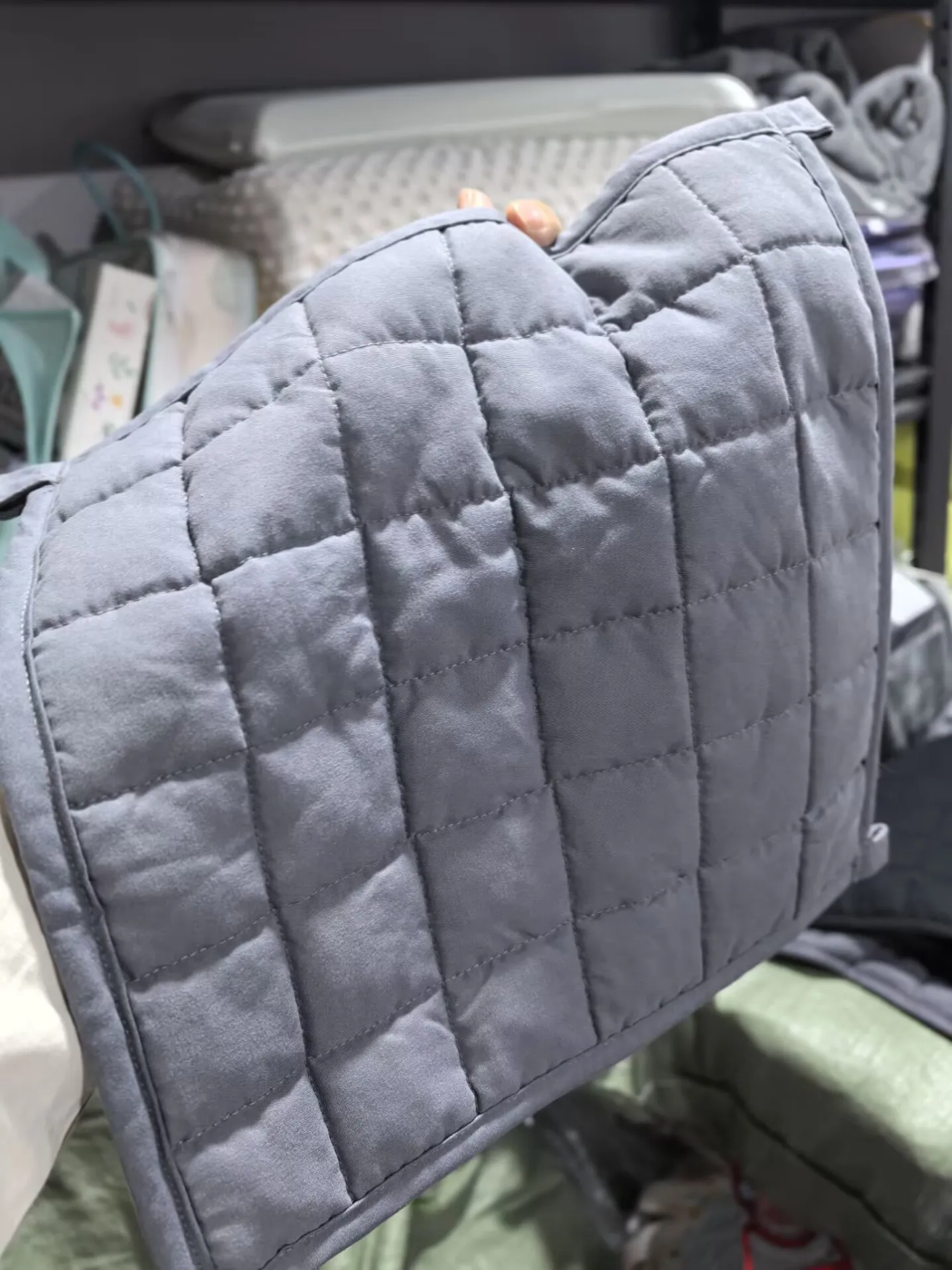
Why Are Glass Beads Used in Weighted Blankets?
When developing a weighted blanket, the filling material is one of the first things to consider.
Glass beads are now a common choice for weighted blankets. But why are they used?
The reason is mainly related to particle size, density, filling volume and how the filling works with the quilted construction.
For product developers, these details are more important than simply asking whether glass beads are “better”.
1. Glass beads are very small
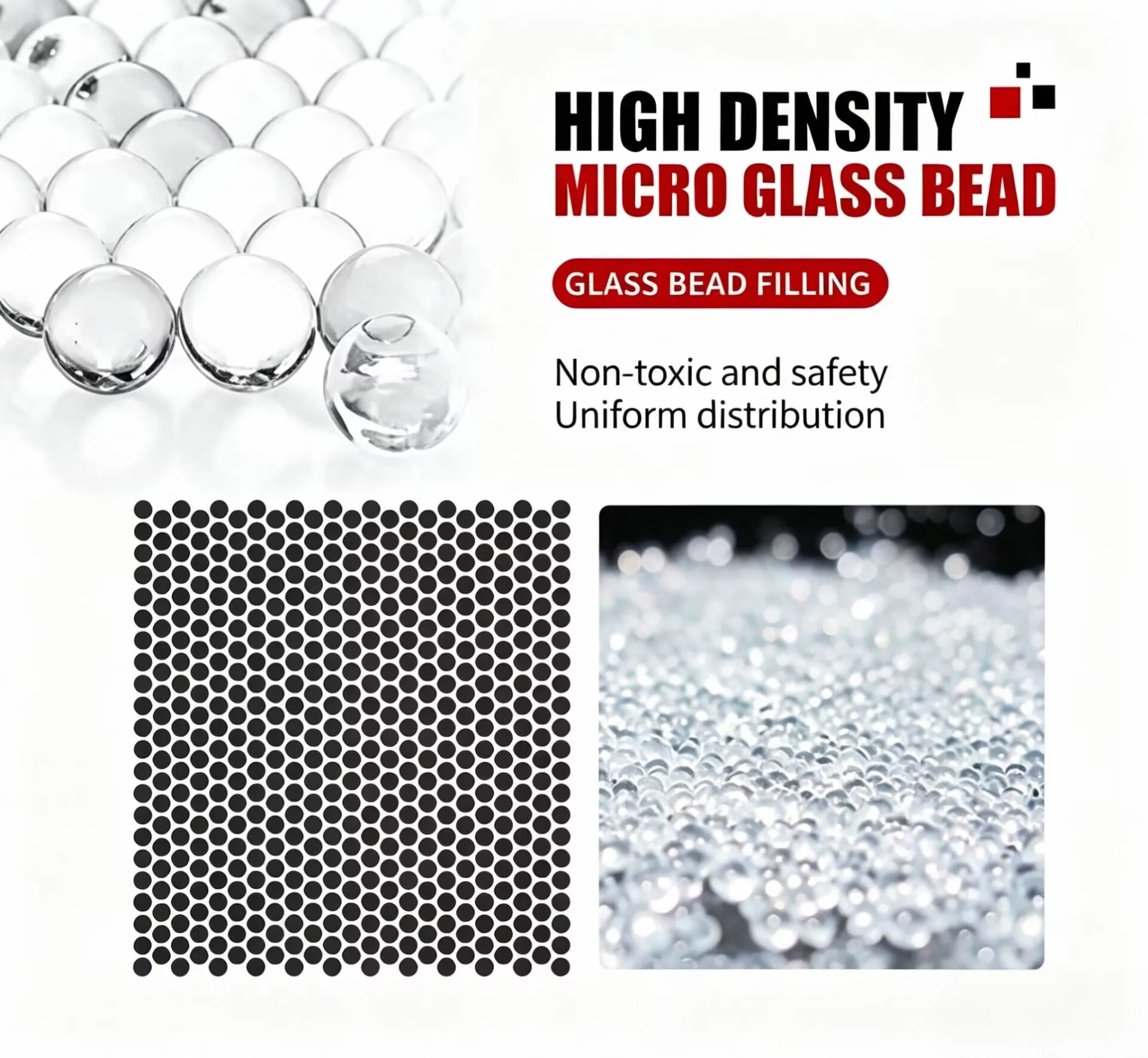
Glass beads used in weighted blankets are usually much smaller than common plastic pellets.
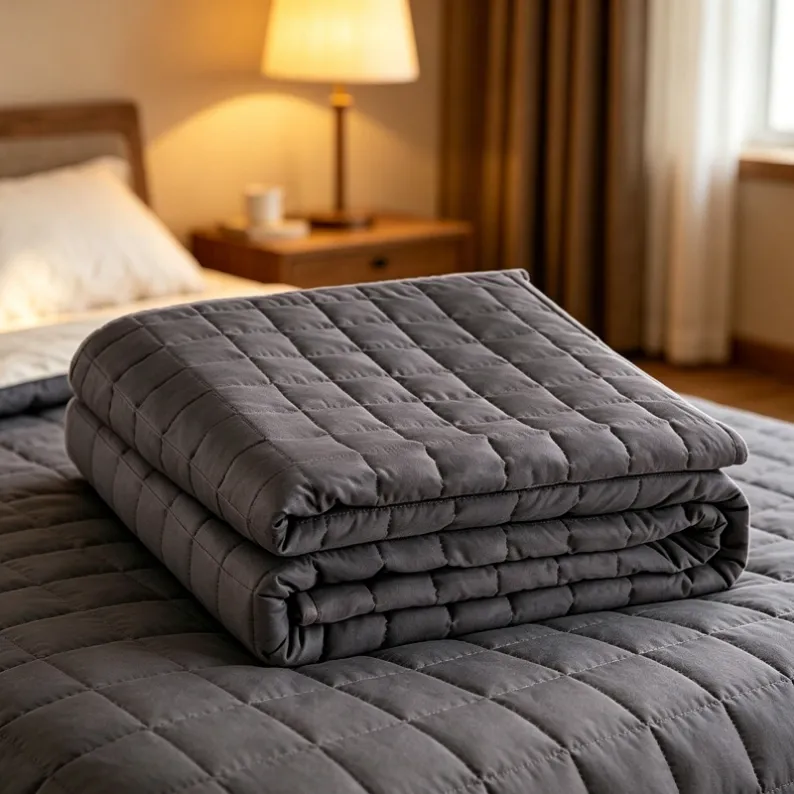
The small particle size is important because the filling needs to stay inside the quilted pockets.
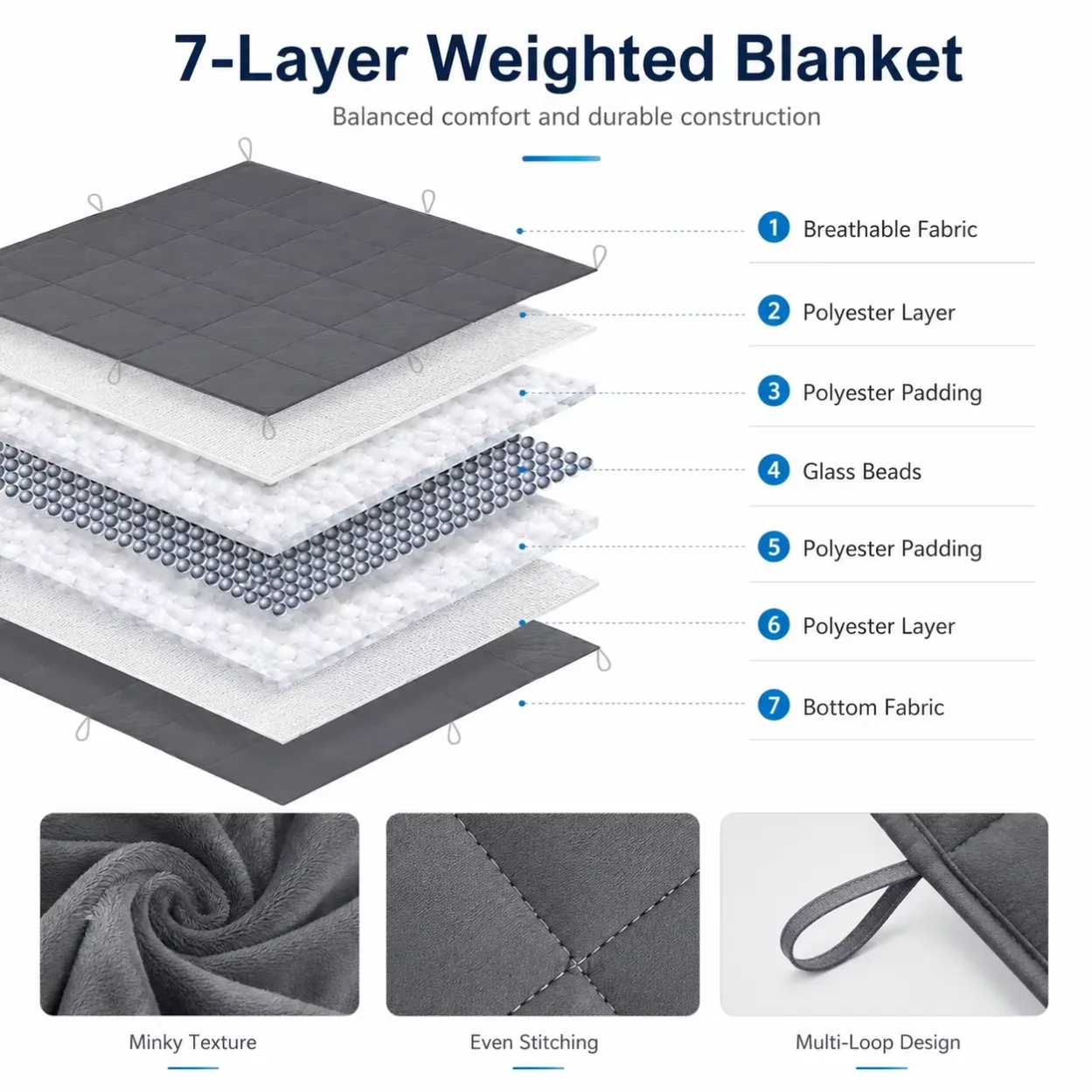
A weighted blanket is normally divided into many small compartments. The filling is placed inside these areas instead of being left loose across the whole blanket.
Smaller particles can move within these pockets more easily and can fit into a relatively compact construction.
This is one reason glass microbeads are suitable for products that need a smooth and controlled filling structure.
2. Glass beads can provide more weight in less volume
Another important point is density.
Compared with typical plastic pellet filling, glass beads can provide the required weight with less filling volume. In simple terms:
Same target weight → less filling volume → more compact filling layer
This difference can affect the final thickness of the blanket.
A weighted blanket needs to reach its specified finished weight, but the filling does not need to occupy a large amount of space to achieve that weight when a denser filling material is used.
This gives the manufacturer more flexibility when developing the overall construction.
3. Less filling volume can help create a thinner blanket
The filling volume affects more than just the inside of the blanket.
It can also affect the finished profile.
When less space is needed for the filling, the blanket can be developed with a relatively thinner and more flexible structure.
For some products, this is important because a weighted blanket is expected to have weight without becoming unnecessarily bulky.
Of course, the final thickness is not decided by the filling material alone.
Fabric thickness, inner layers, quilting, pocket size and finished weight all affect the final product.
So the filling choice should be made together with the rest of the construction.
4. Small particles work well with quilted pockets
A weighted blanket is not simply fabric plus filling.
The filling needs to be controlled by the internal construction.
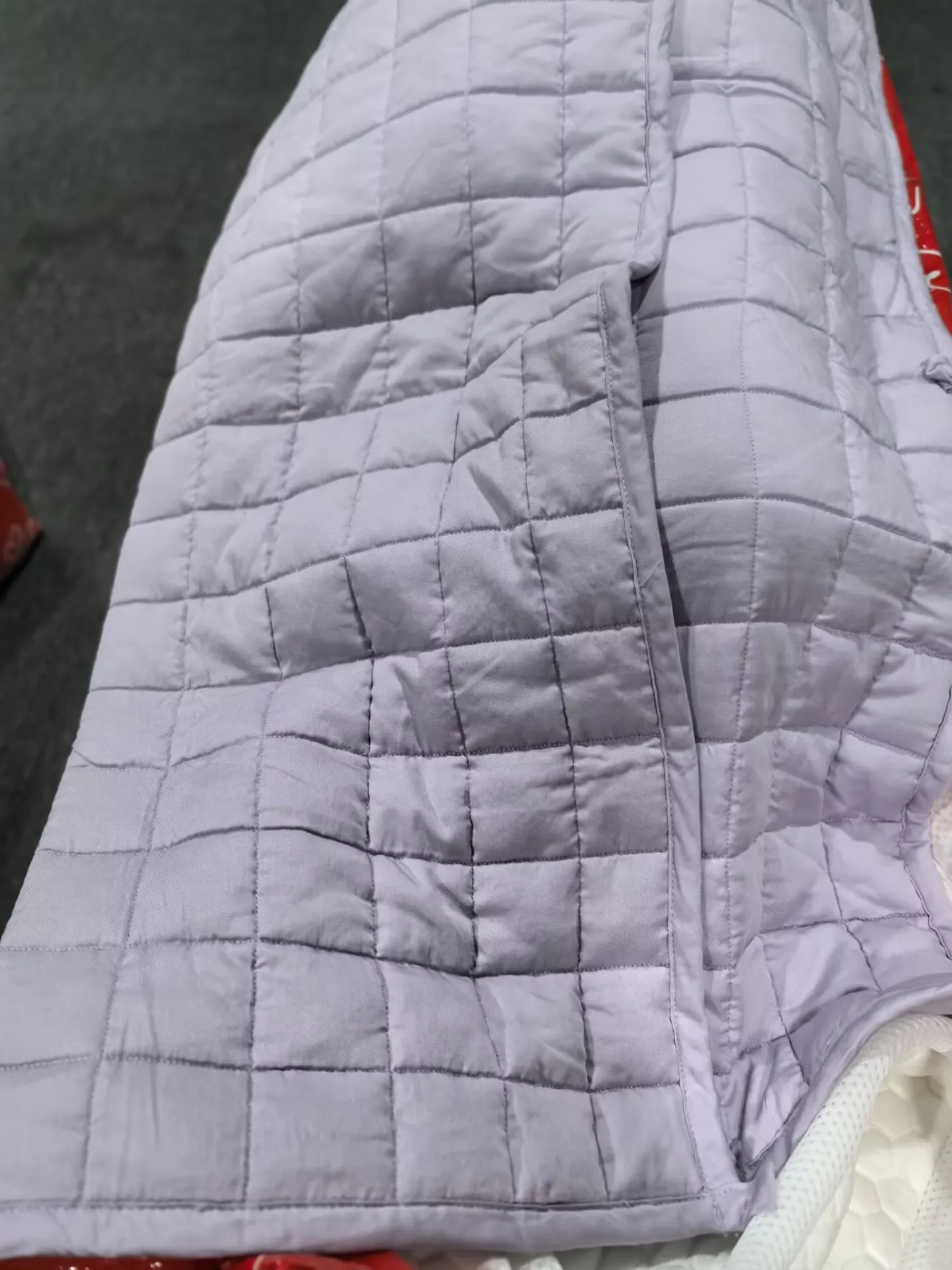
Quilting divides the blanket into separate pockets and helps keep the filling in defined areas.
When the pockets are relatively small, the filling has less space to move around inside each section.
This is especially important for glass beads because they are very small.
The purpose of the quilting is not to stop every individual bead from moving. It is to control how much filling can move within each pocket and across the blanket.
This is why filling material and pocket construction should always be considered together.
5. Weight distribution is also a construction issue
Another common misunderstanding is that using glass beads automatically gives even weight distribution.
It does not.
The filling material is only one part of the system.
The finished weight of the blanket, the amount of filling in each pocket, pocket size and quilting pattern all affect how the weight is distributed.
For example, if the pockets are too large, the filling has more room to move inside them.
If the filling quantity is not controlled properly, different areas of the blanket may also feel different.
So when developing a weighted blanket, the question should not only be:
“Which filling should we use?”
It should also be:
“How should this filling work with the pocket construction?”
6. The filling and quilting need to be developed together
This is probably the most important point for product development.
Glass beads can be a suitable filling material because they are small and relatively dense. But the final product still depends on how the blanket is constructed around them.
The target weight, blanket size, filling volume, pocket size, quilting and fabric all need to work together.
This is also why a sample should be checked as a complete product rather than looking at the filling material alone.
A good weighted blanket is not simply made by choosing glass beads.
It is developed by matching the filling material with the right construction.
Final thoughts
Glass beads are widely used in weighted blankets for a practical reason.
Their small particle size and relatively high density allow the required weight to be placed into a more compact filling volume. This can support a thinner blanket structure and work well with small quilted pockets.
But glass beads themselves do not determine the quality of the finished blanket.
Filling + pocket construction + quilting + fabric + finished weight all need to be considered together.
If you are developing a private label weighted blanket and already have a target size, weight or fabric, these details can be discussed before sampling.
More related pages:
📩 Send us your project needs or specifications, and we will respond with a clear quotation and production suggestion within 24 hours.
Email: info@hengmy.com