Oct 28, 2026Weighted Blankets
Weighted Blanket Layers: What Buyers Should Know
Learn how weighted blanket layers, 10 × 10 cm quilting, and material choices affect product development and pricing before you order a sample.
Weighted Blanket Layers: What Buyers Should Know
“Super. We need the quilt 10 × 10 cm. Can you write about every layer? Will you estimate the price only after the sample production?”
These are practical questions when developing a weighted blanket for your own brand. Before making a sample, buyers want to understand the construction, check whether the factory can meet their requirements, and know how much the product may cost.
From my experience in weighted blanket development, it is better to discuss these details before sampling. A sample is important, but it should not be the first time both sides start talking about the product specifications.
What Does a 7-Layer Weighted Blanket Look Like?
The number of layers alone does not explain the whole construction. Two weighted blankets can both have seven layers but use different fabrics, padding materials, and filling arrangements.
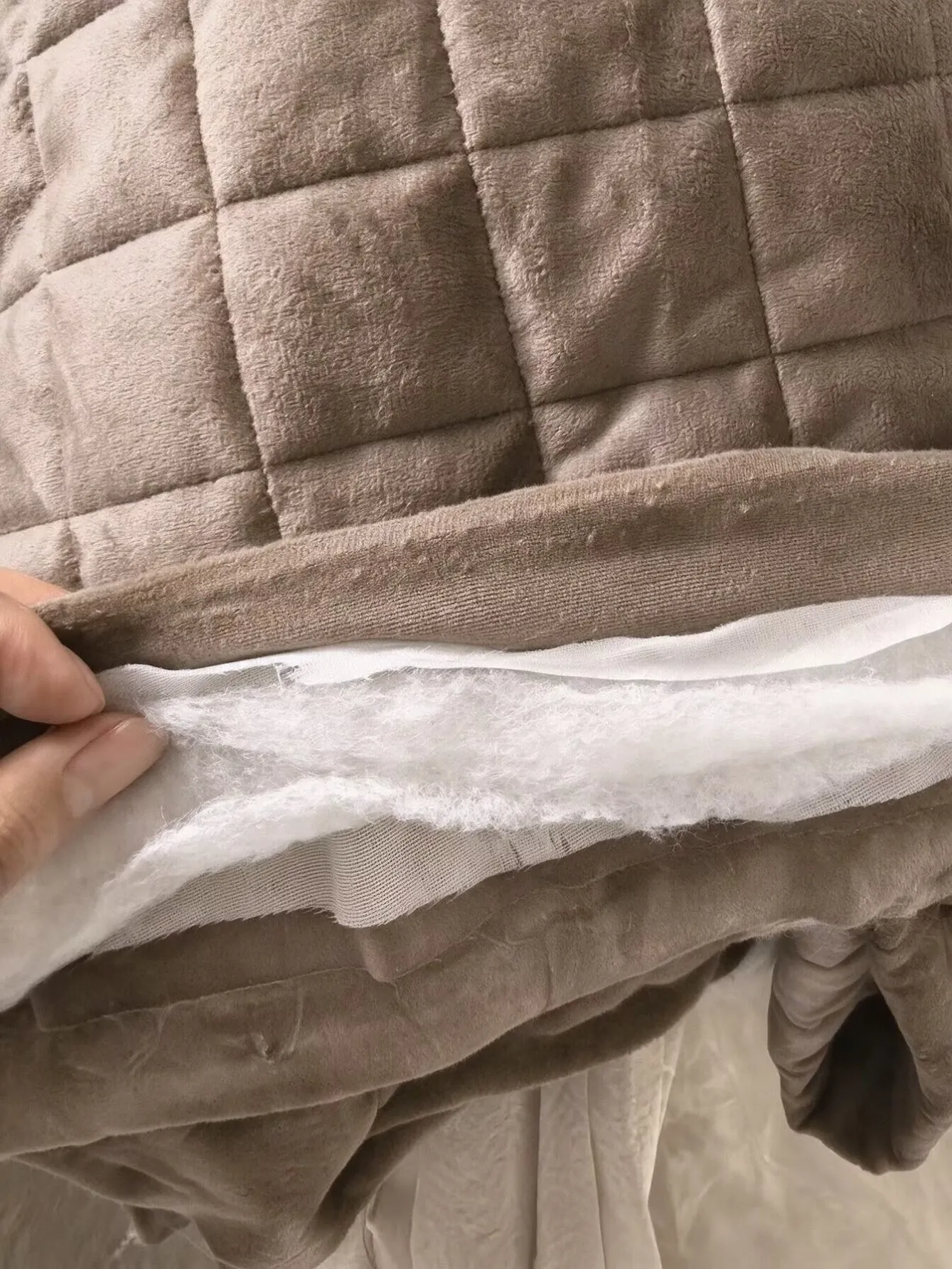
For a cotton weighted blanket, one possible 7-layer construction is:
- Top fabric: 100% cotton, such as the requested 300 TC cotton.
- Inner lining: A lining layer beneath the outer fabric.
- Padding: Polyester padding.
- Filling: Small glass beads distributed inside the quilted pockets.
- Padding: Another layer of polyester padding.
- Inner lining: A second lining layer.
- Bottom fabric: The other side of the cotton shell.
This is one possible construction, not a fixed standard for every weighted blanket. The actual materials and layer arrangement should be confirmed for each product.
A 5-layer construction can be simpler: two outer fabric layers, two padding layers, and glass beads between them. Adding two lining layers creates a 7-layer structure.
More layers mean additional materials and processing, so the cost may increase. However, more layers do not automatically mean a better product. The right construction depends on the fabric, the intended use, the required hand feel, and the target cost.
Why Choose 10 × 10 cm Quilting?
Quilting is another detail worth confirming before sampling.
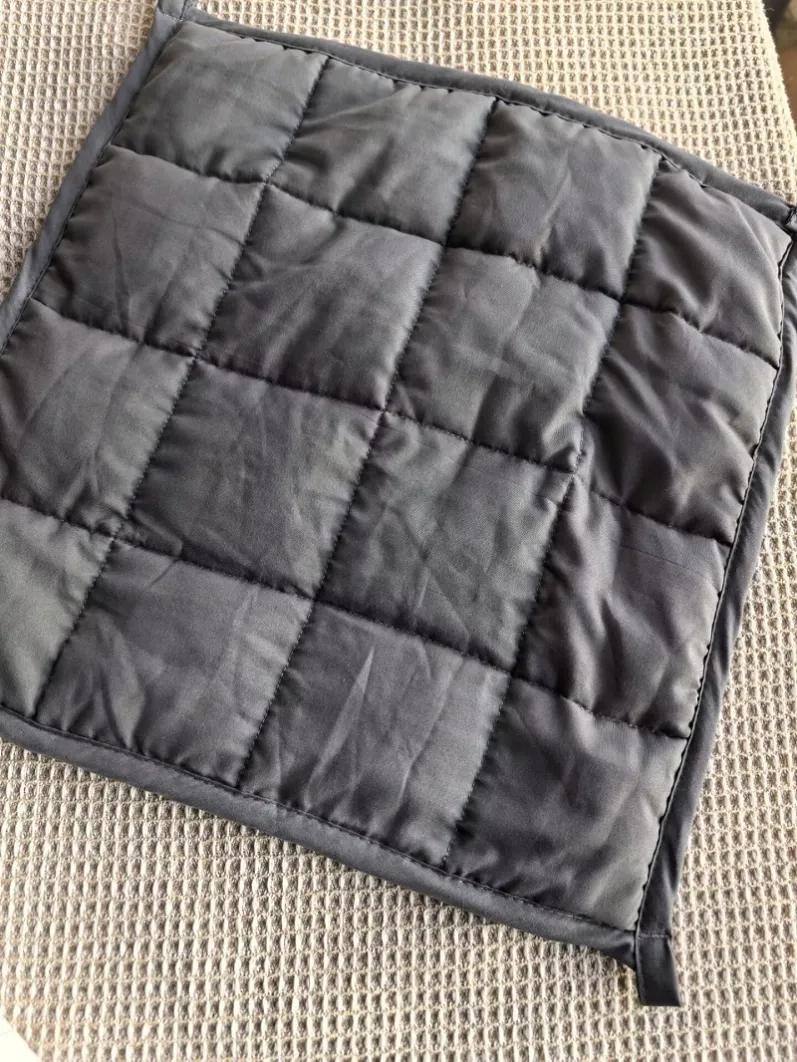
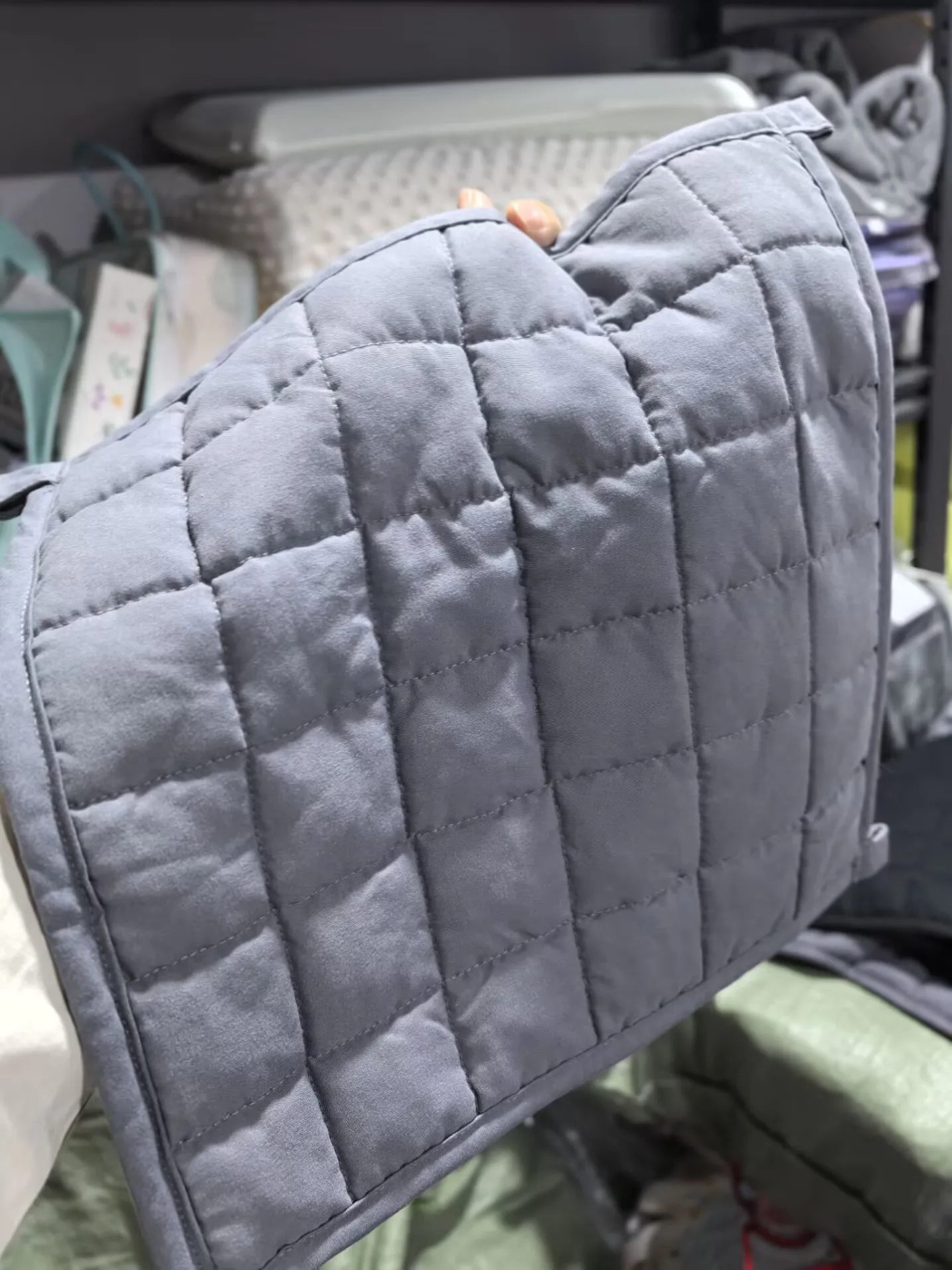
With 10 × 10 cm quilting, the blanket is divided into relatively large square pockets. Compared with 5 × 5 cm quilting, it generally requires less quilting work and can be more economical to produce.
Smaller pockets can help limit how far the glass beads move within each pocket. But quilting size is only one part of the design. The pocket construction, filling amount, sewing quality, and overall blanket specifications also matter.
If your product requires 10 × 10 cm quilting, tell the factory at the beginning. This helps both sides work from the same specification when discussing the sample and quotation.
Should You Wait Until the Sample Is Finished to Get a Price?
Not necessarily.
A factory can usually provide an estimated quotation before sample production when the main specifications are clear enough. These normally include:
- Finished blanket size and total weight
- Outer fabric type and fabric specifications
- Number of layers and materials used
- Glass bead size and quilting dimensions
- Packaging requirements
- Estimated order quantity
If some details are still undecided, supplier may need to make assumptions for the initial quotation. These assumptions should be stated clearly, rather than treating the price as final.
After the sample is made, both sides can check whether the construction matches the agreed requirements. If the fabric, layer arrangement, quilting, or packaging changes, the quotation may also need to be updated.
This is why I prefer to discuss the main specifications and provide an initial price estimate before sampling, then confirm the price after the details have been checked.
It gives buyers a better basis for deciding whether to proceed, instead of spending time and money on a sample before knowing whether the product fits their budget.
A Sample Should Answer Specific Questions
Before requesting a sample, think about what you need to check.
Are you mainly evaluating the fabric feel? Do you want to inspect the inner construction? Are you concerned about stitching quality or glass bead movement?
A small sample can help you review the fabric, quilting, and workmanship. However, it cannot fully represent the weight distribution and handling of a finished full-size blanket. If these points are important, they should be checked during full-size sample development.
Also, make sure you know whether the sample uses the exact materials and construction you plan to order. If it is only a reference sample, some differences should be expected.
Developing a Weighted Blanket for Your Brand?
A clear specification makes communication easier and helps avoid unnecessary changes later.
If you are developing a weighted blanket, you can send us your preferred size, total weight, fabric, layer construction, quilting size, packaging, and estimated order quantity. If you do not have every detail yet, we can start with the information available and discuss the remaining points together.
Contact us to discuss your weighted blanket project and request an OEM/ODM quotation. We can review the proposed construction first, so you have a clearer idea of the product and its estimated cost before moving to sampling.
📩 Send us your project needs or specifications, and we will respond with a clear quotation and production suggestion within 24 hours.
Email: info@hengmy.com
More related pages: