Oct 28, 2026Weighted Blankets
How to Reduce Glass Bead Movement in Weighted Blankets
Learn how blanket layers, quilting pocket size, and sewing control affect glass bead distribution when developing a weighted blanket for your brand.
How to Reduce Glass Bead Movement in Weighted Blankets
“Do you produce 11-layer weighted blankets? The main idea is to spread the glass beads evenly and avoid them collecting at the edges and corners.”
This is a reasonable question when developing a weighted blanket. If the glass beads move away from their intended positions, some areas may feel heavier while others feel lighter. For a brand owner, this is not only a product design issue. It can also affect the customer's experience with the finished blanket.
But does adding more layers solve the problem?
Not by itself. When we look at glass bead movement, there are three things worth considering: the number of layers, the quilting pocket size, and how the quilting is controlled during production.
More Layers Can Help, but the Construction Matters
A weighted blanket usually has two outer fabric layers, with padding and glass beads arranged between them. Depending on the design, additional lining layers can be added.
A 5-layer and a 7-layer blanket may have different construction details, while an 11-layer design requires even more materials and processing.
Additional layers may help support the construction, depending on how the blanket is designed. However, the layer count alone does not tell us whether the beads will stay evenly distributed.
If the quilting pockets are too large, or the seams do not properly separate the filling compartments, simply adding layers may not solve the original problem.
For this reason, it is better to review the complete construction before deciding whether an 11-layer design is necessary.
Quilting Pocket Size Makes a Difference
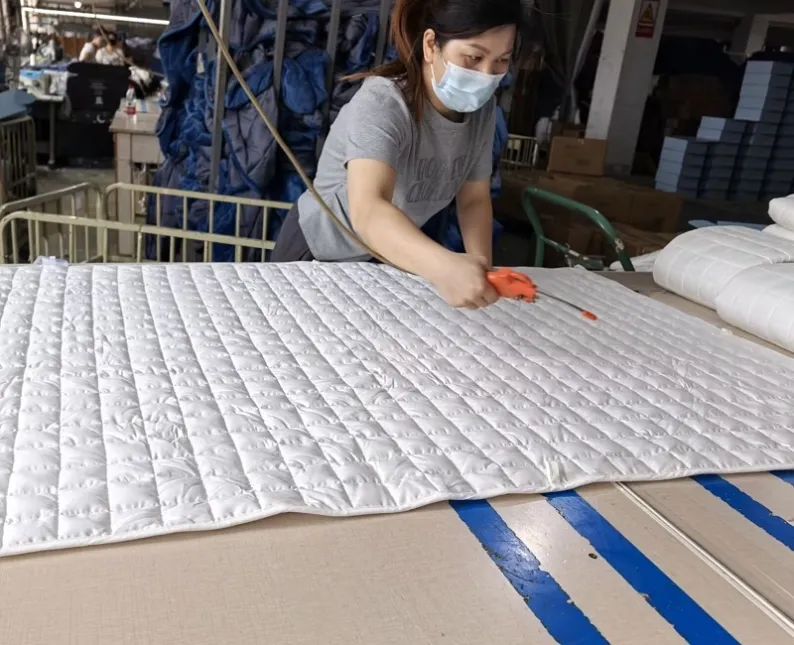
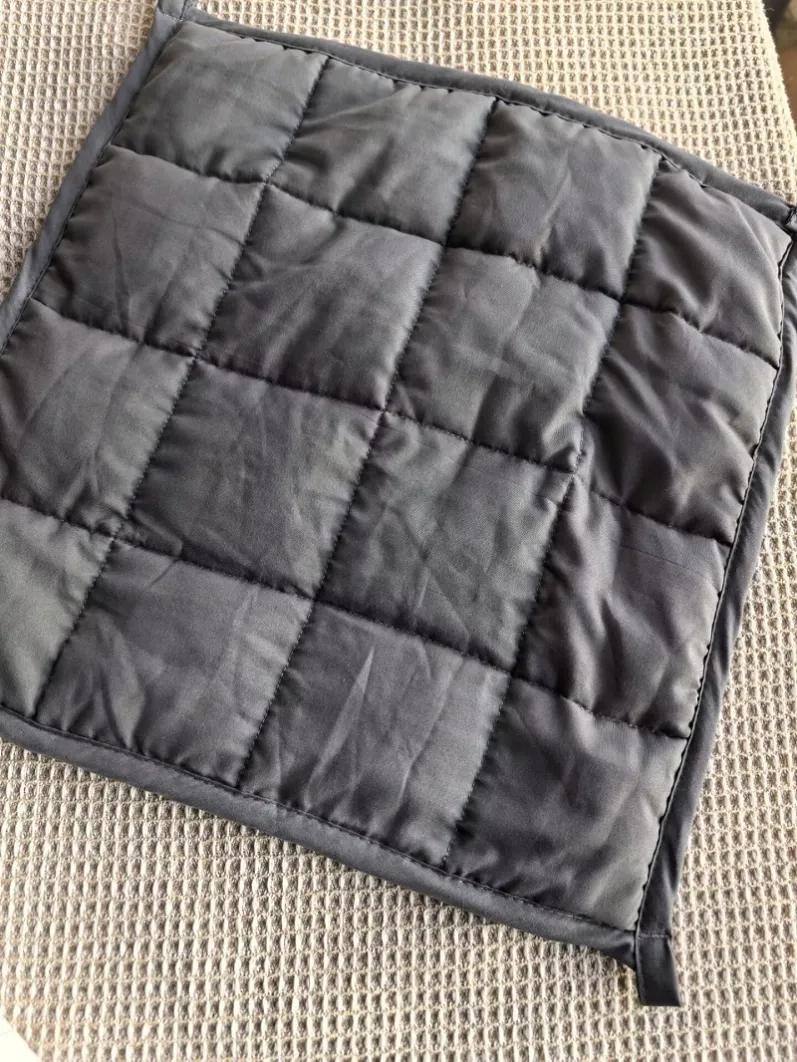
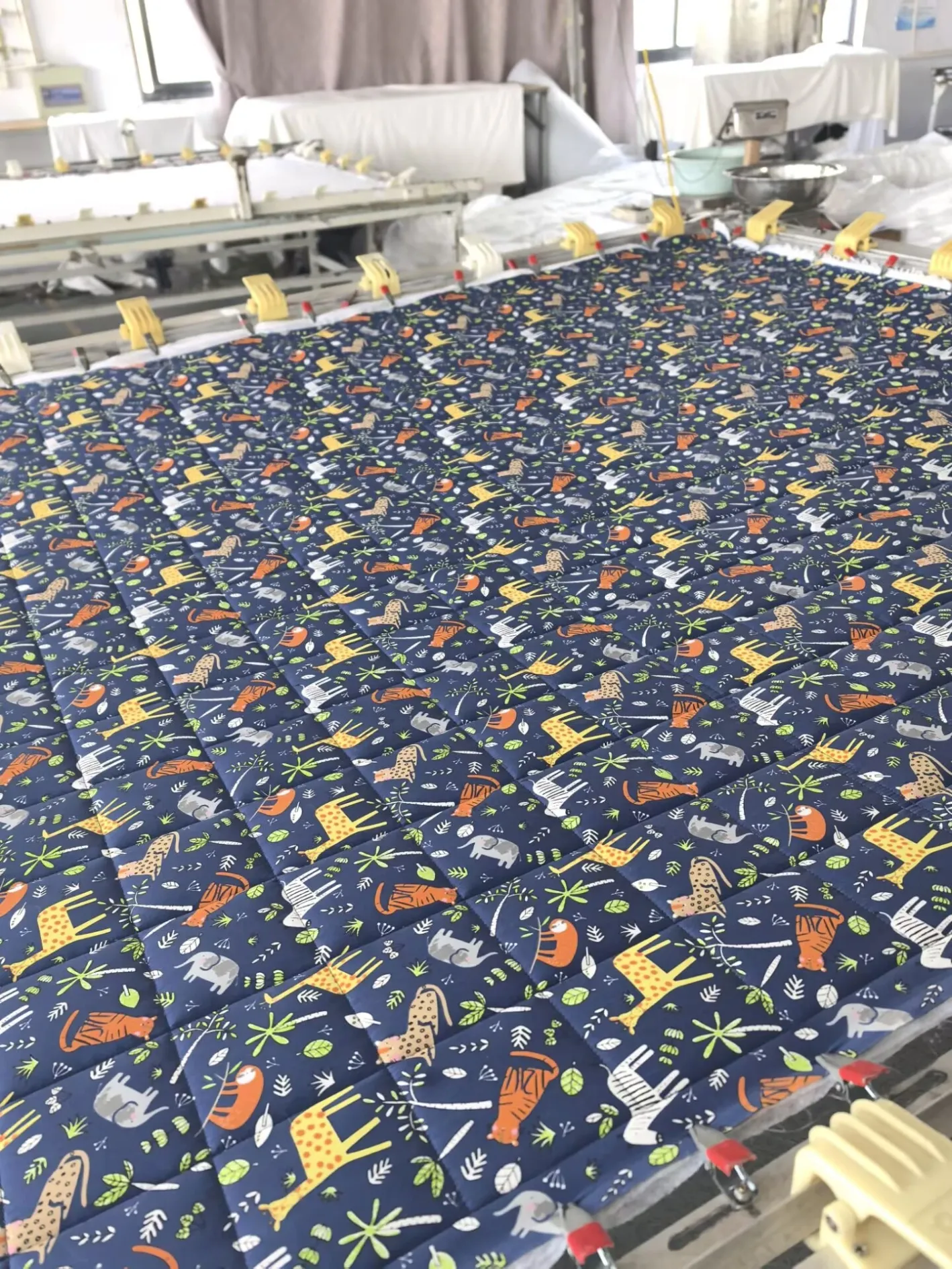
Quilting divides the blanket into individual pockets that hold the glass beads.
Common quilting sizes include 5 × 5 cm, 7 × 7 cm, 10 × 10 cm, 12 x 12 cm, 15 x 15 cm. The suitable size depends on the blanket design and production requirements.
With smaller pockets, the beads have less space to move within each compartment. For example, a 5 × 5 cm quilting pattern creates smaller compartments than a 10 × 10 cm pattern.
Smaller pockets can help limit bead movement, but they also require more quilting work. This can increase production cost.
A larger pocket size may be more economical, but it should be considered together with the filling amount, blanket weight, and overall construction.
There is no single quilting size that is automatically right for every weighted blanket. The choice should be made according to the product requirements, rather than choosing a size based on cost alone.
Quilting Workmanship Needs Attention
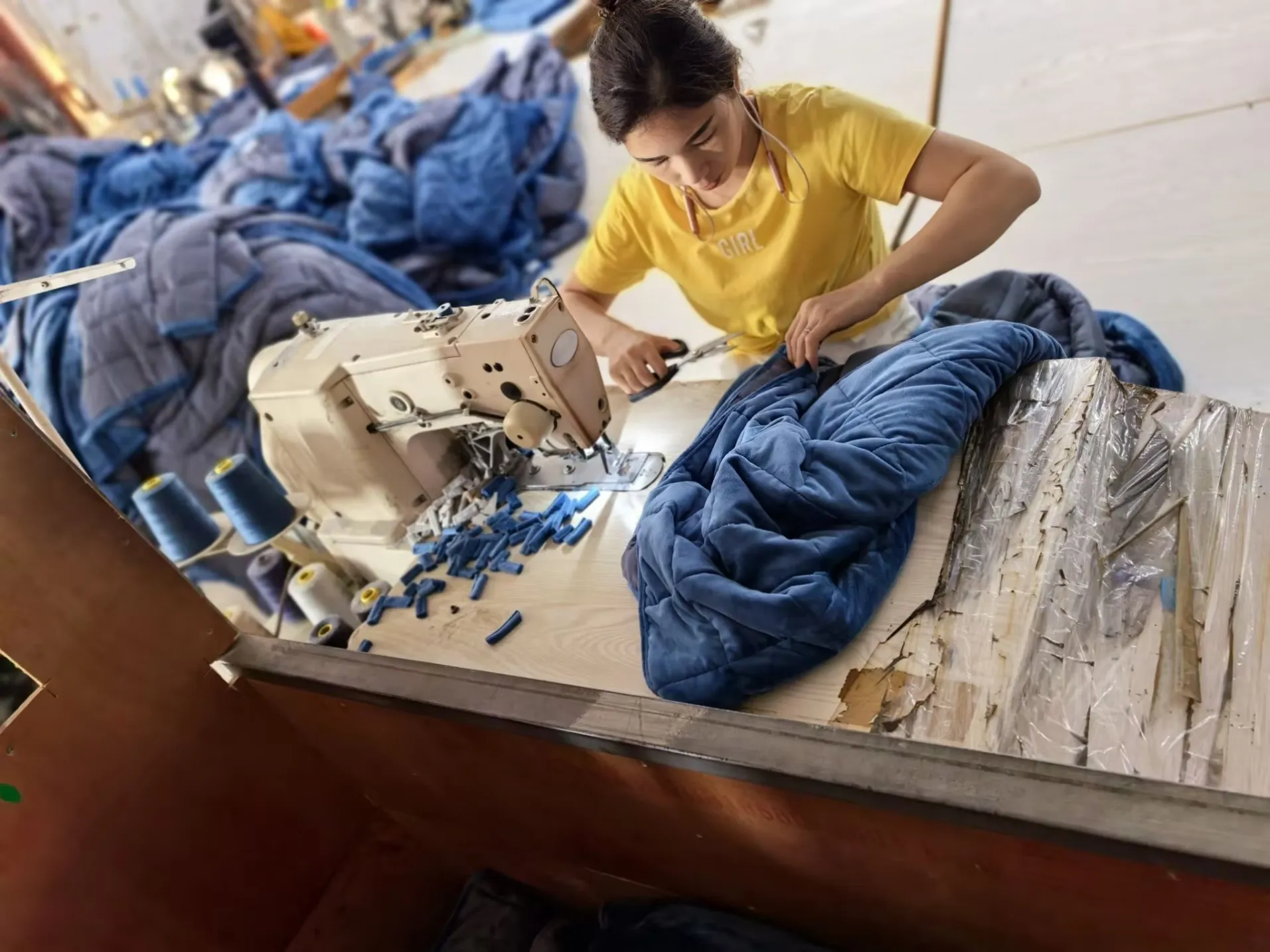
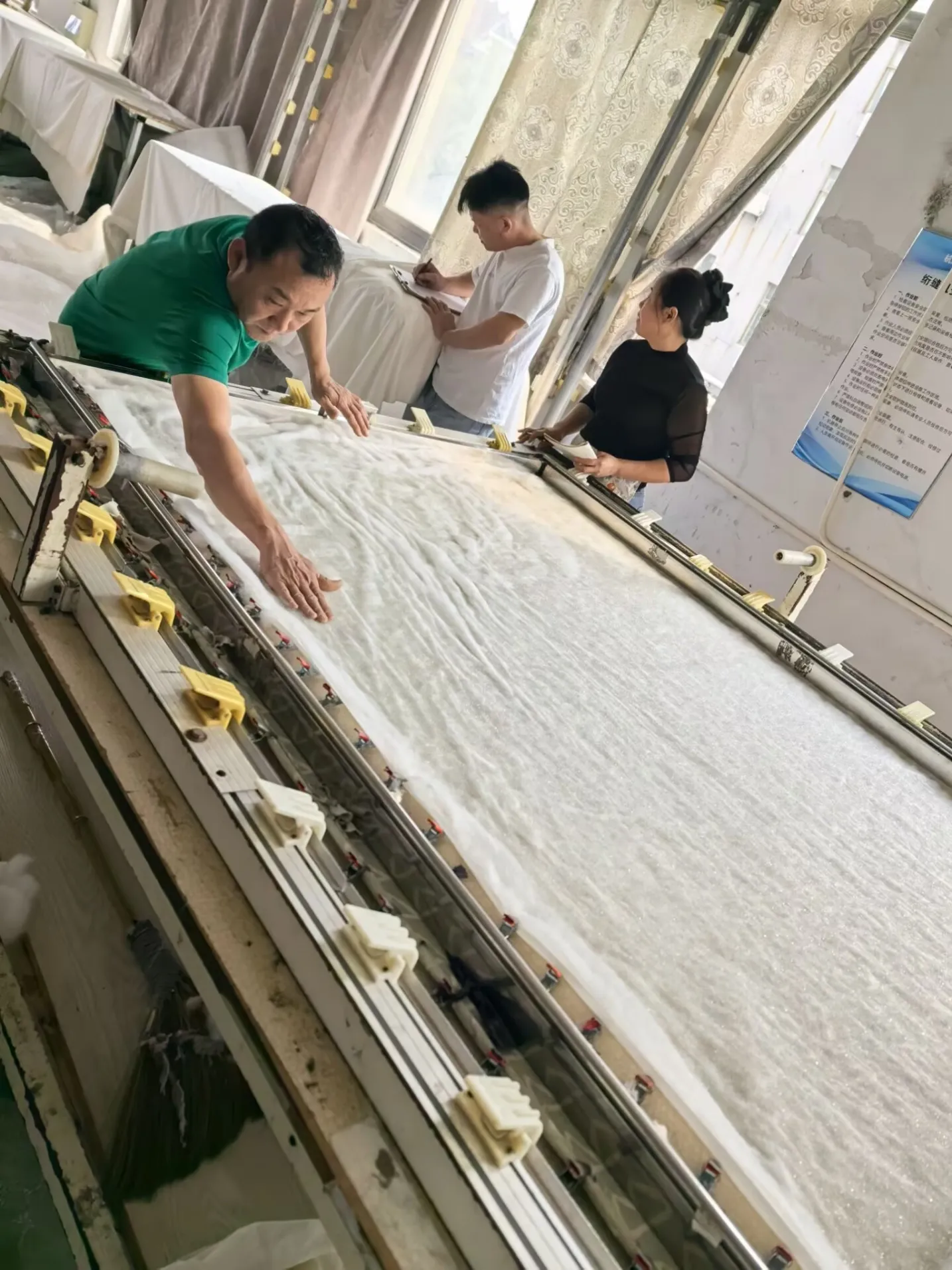
Even when the layer construction and pocket size have been decided, production control still matters.
The quilting needs to form clear, properly closed compartments. The stitching should be consistent, and the pocket dimensions and filling amounts should follow the agreed specifications.
If the compartments are not made consistently, the finished blanket may not perform as expected, even when the design looks good in computer.
Filling control is also important. Glass beads need to be distributed according to the specified amount in each pocket. The overall blanket weight alone does not confirm that every compartment has been filled correctly.
This is why the production process matters as much as the initial design. A specification can describe the intended construction, but workmanship determines whether the finished product follows it.
What Should You Confirm Before Developing a Sample?
If your main concern is glass beads collecting at the edges or corners, start by explaining this requirement to the factory.
Discuss the proposed layer construction, quilting pocket size, filling specifications, and how the quilting will be controlled. If you already have a reference blanket, photos or a physical sample can also help clarify the problem you want to solve.
A sample can then be used to review the construction and workmanship. However, a small fabric sample cannot fully show how the weight is distributed across a finished blanket. The full-size sample is more useful when evaluating the overall result.
More layers may be part of the solution, but they should not be treated as the only solution.
Developing a Weighted Blanket for Your Brand?
Every additional layer affects materials and processing, so it is worth understanding the reason for the change before finalizing the specification.
If you are developing a weighted blanket and are concerned about glass bead movement, share your preferred size, total weight, fabric, quilting dimensions, and proposed layer construction with us.
We can discuss the construction options and provide an OEM/ODM quotation based on your requirements before moving to sampling.
Contact us to discuss your weighted blanket project. Let's review the product requirements first, so the sample is developed to address the right problem.
📩 Send us your project needs or specifications, and we will respond with a clear quotation and production suggestion within 24 hours.
Email: info@hengmy.com
More related pages: