Oct 21, 2026Weighted Blankets
What Happens When Weighted Blanket Pockets Are Too Large?
Learn how large weighted blanket pockets can affect glass bead movement, weight distribution and user feel, and how to choose a suitable quilting size.
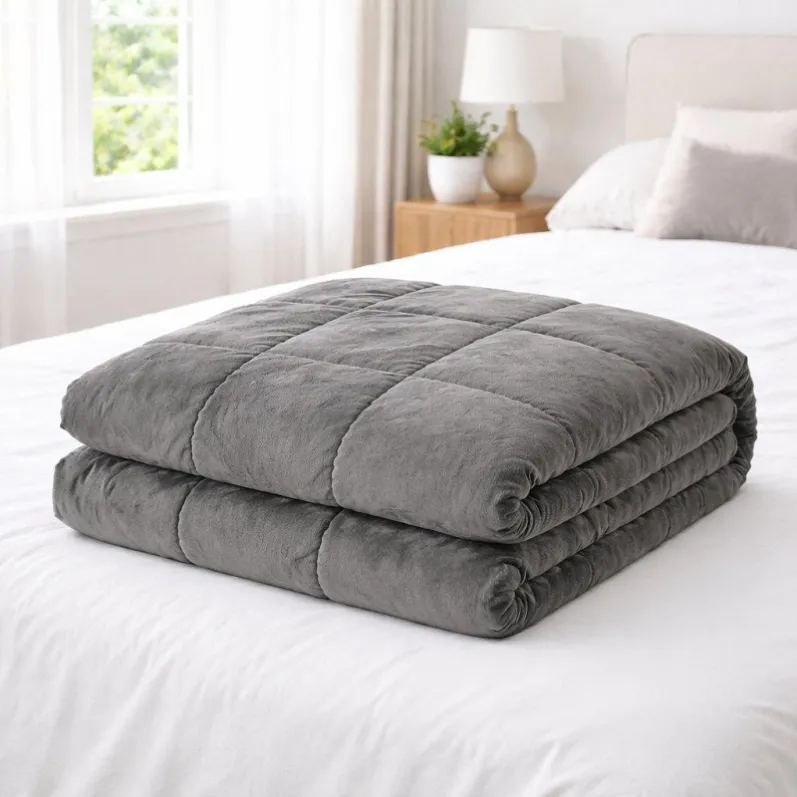
What Happens When the Pockets Are Too Large?
For clients who plans to develop a weighted blanket of his own brand, mostly often focus on the finished size, total weight and fabric. But pocket size is also worth discussing before production starts.
The pockets hold the glass beads in separate sections. If the pockets are larger, the beads have more room to move inside each section. Depending on the filling amount and construction, this may affect how the weight feels across the blanket.
Does this mean larger pockets are always a problem? No. The result depends on the complete product design, not pocket size alone.
Here are a few points worth considering when choosing a quilting size for your product.
Larger Pockets Give the Filling More Room to Move
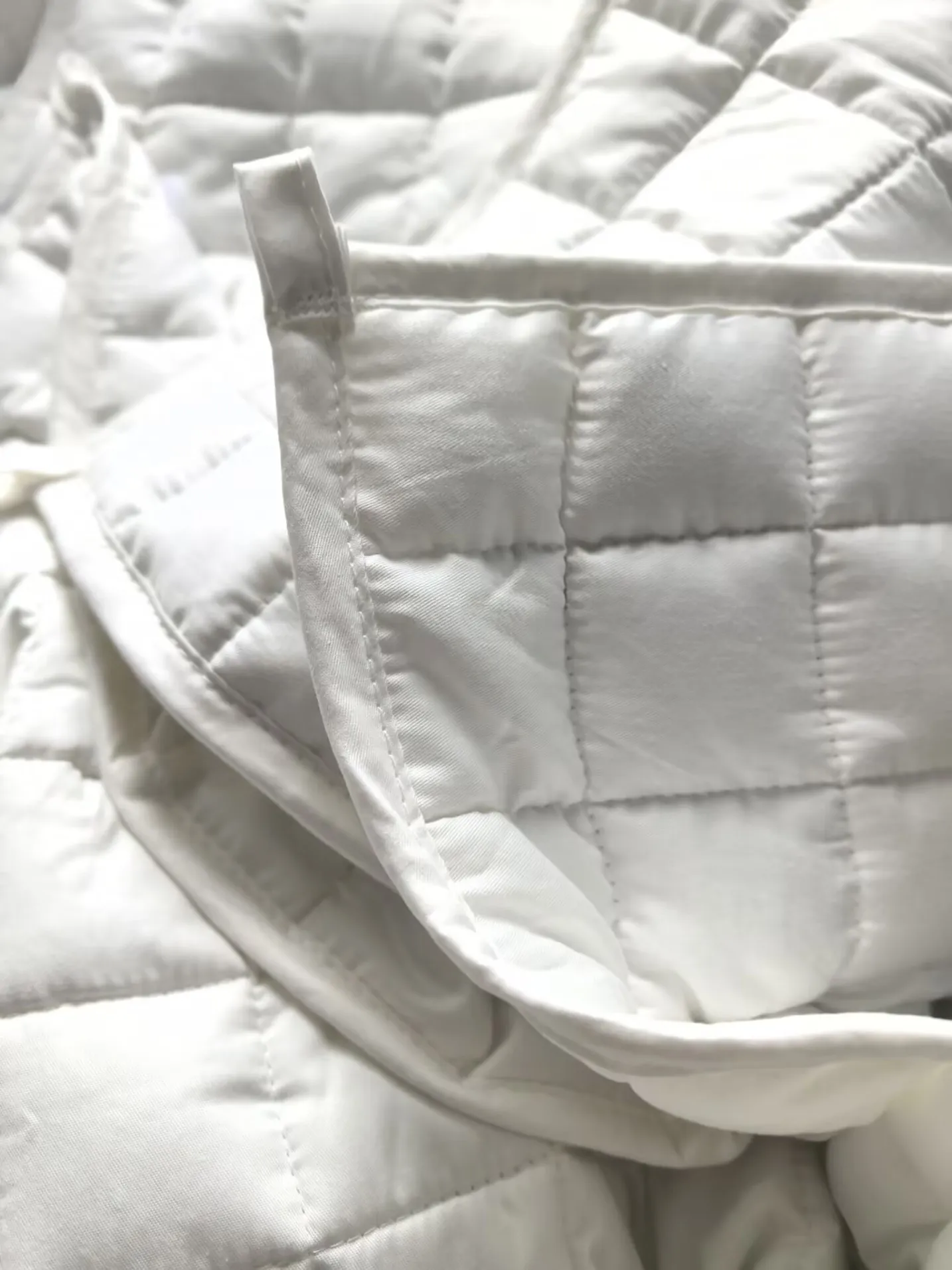
A weighted blanket is divided into quilted pockets to keep the filling in separate areas. The beads can still move inside each pocket, but the stitched boundaries limit how far they can travel.
With larger pockets, there is more space for the glass beads to shift around within each section. When the blanket is lifted, folded or repositioned, the filling may move within the available space.
This is not automatically a defect. Some movement is normal. The important question is whether the pocket size works with the amount of filling placed inside it.
If the pocket is relatively large and the filling quantity is not well controlled, the filling may not stay in the intended position as consistently as expected.
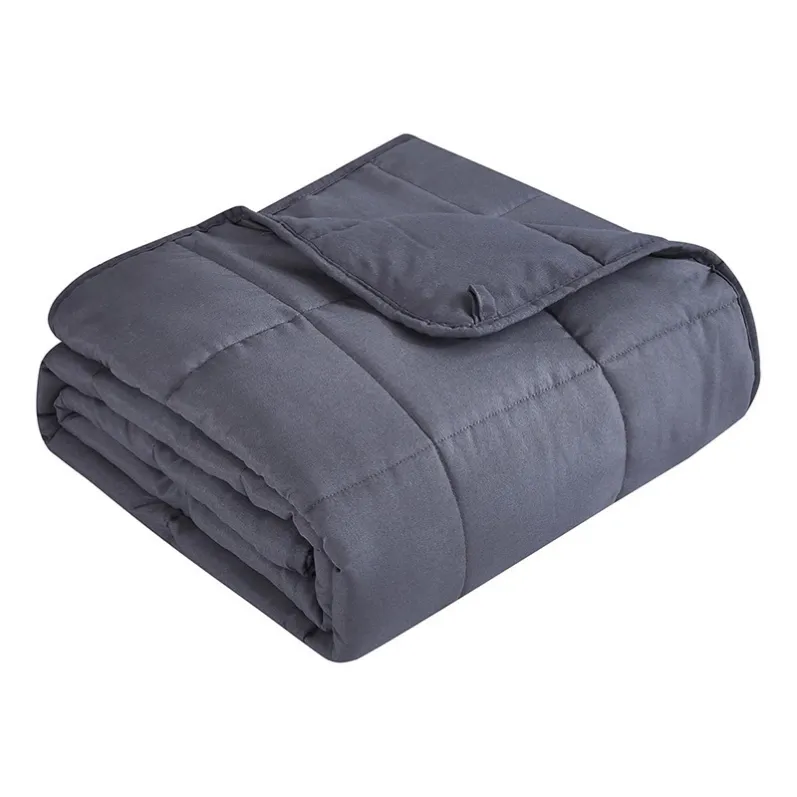
Can Large Pockets Affect Weight Distribution?
They can, but pocket size is only one factor.
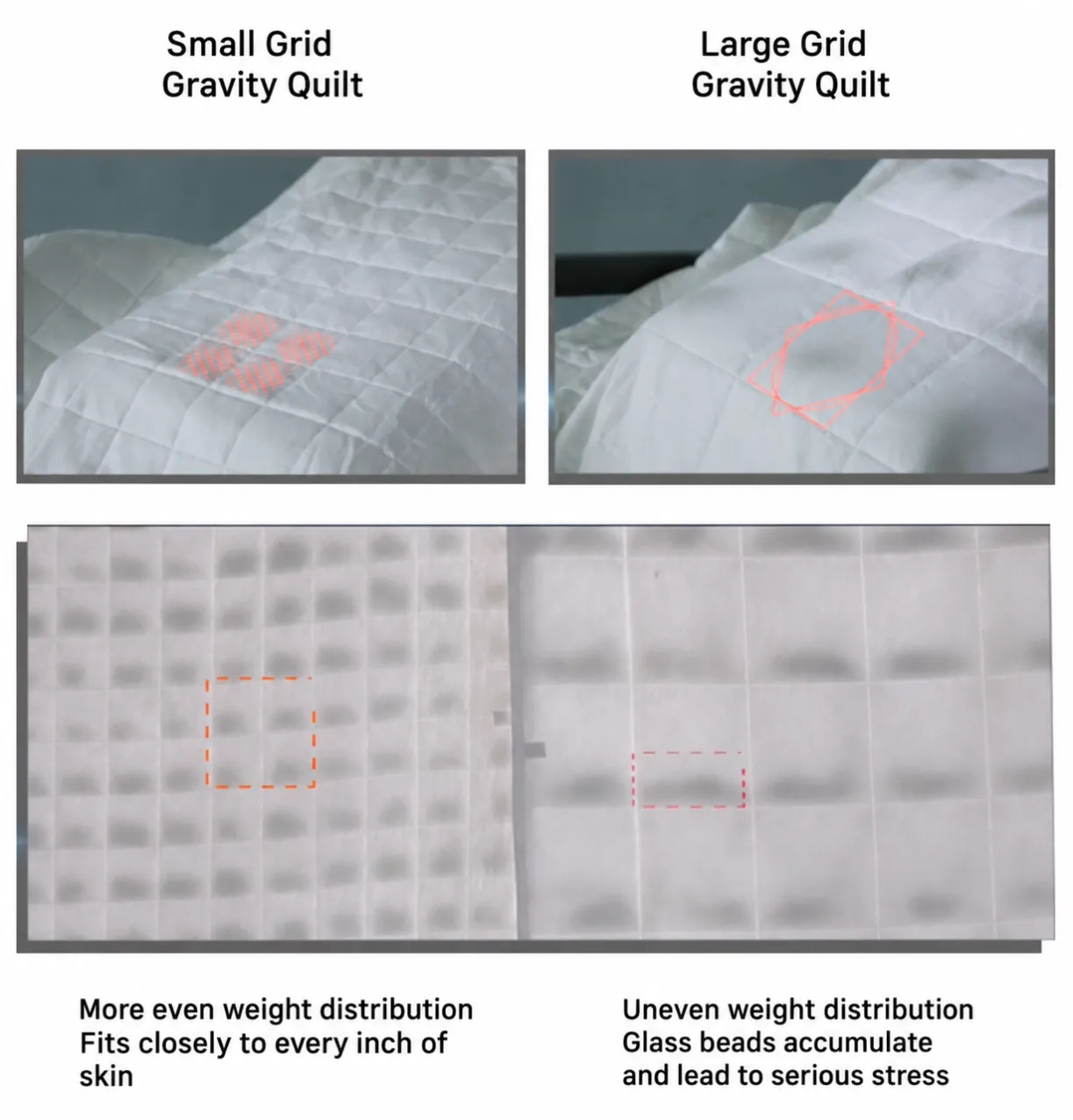
Imagine two weighted blankets with the same finished weight. One uses smaller pockets, while the other uses larger pockets.
In the smaller pockets, the filling has less room to move within each section. In the larger pockets, it has more space to shift.
This can make a difference in how the filling sits inside individual compartments. However, it does not mean that a blanket with larger pockets will always have uneven weight distribution.
The amount of glass beads in each pocket, filling control during production, stitching and overall construction all matter. Even with small pockets, inconsistent filling quantities can affect the finished product.
For product developers, it is better to look at the pocket size and filling plan together instead of judging the design by the quilting pattern alone.
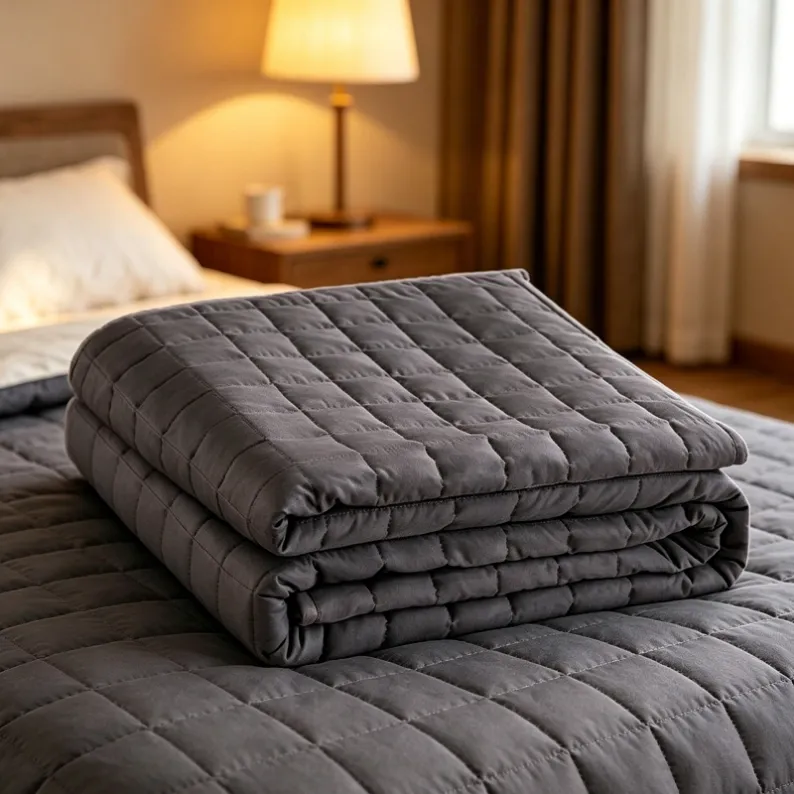
What Might the User Feel?
When filling moves within a pocket, the way the blanket rests on the body may change slightly as the blanket is moved or repositioned.
If the filling gathers more toward one side of a pocket, that section may feel different from when the beads are more evenly spread inside it. Whether the difference is noticeable depends on the pocket size, filling amount, fabric and finished construction.
This is why checking a finished sample matters. A specification sheet can tell you the pocket size and total weight, but it cannot show every detail of how the blanket feels when handled.
For brands developing a new product, the sample is a useful opportunity to review whether the construction matches the intended product experience.
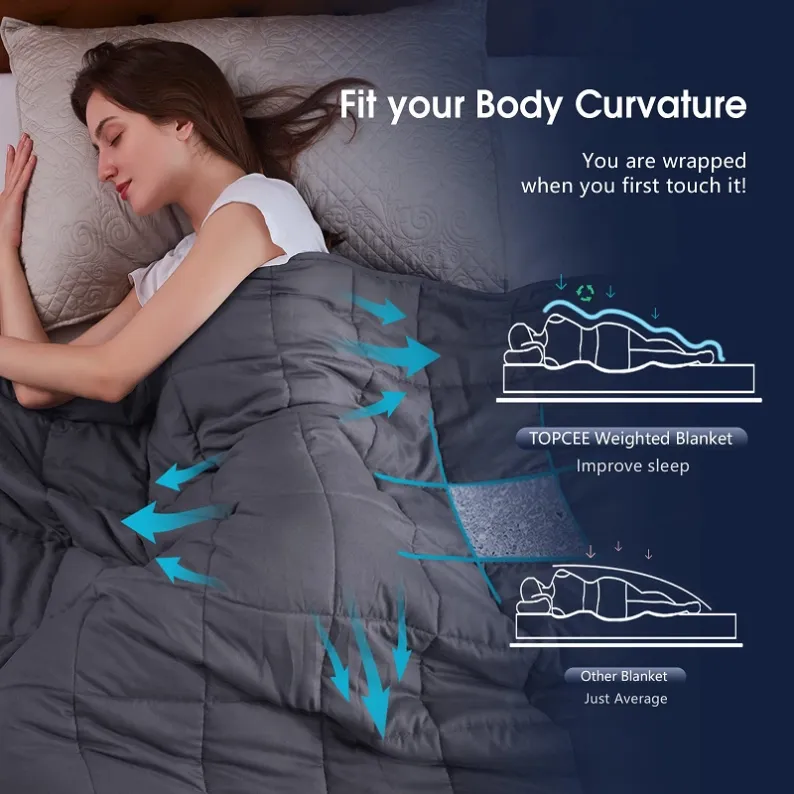
4. Should You Always Choose Smaller Pockets?
Not necessarily. Smaller pockets can help restrict filling movement, but they also require more quilting work and can increase production cost.
We offer three regular quilting sizes for weighted blankets:
- 5×5 cm: Smaller pockets that help limit the space available for glass bead movement. This option has a higher production cost.
- 7×7 cm: A middle option for buyers comparing pocket size and cost.
- 10×10 cm: Larger pockets and the most economical option among these three regular sizes.
The right choice depends on your target market, product positioning and acceptable price level. A product designed for a price-sensitive retail range may have different requirements from one where tighter control of filling movement is a priority.
Rather than assuming the smallest pockets are always the best choice, consider the full specification and compare samples where needed.
Check Pocket Size Together With the Full Construction
Pocket size should not be decided separately from the other product details.
The blanket dimensions, target weight, filling material, amount of filling per pocket, fabric and quilting all work together. A change in one detail may mean that another part of the construction needs to be reviewed.
For example, changing the blanket size while keeping the same pocket dimensions changes the number of pockets. The filling plan then needs to match the new construction.
This is why it is useful to confirm these details before sampling and bulk production.
Developing a Weighted Blanket for Your Market?
If you are planning a private-label weighted blanket, tell us your target size, finished weight, fabric preference and target price.
We can discuss the available 5×5 cm, 7×7 cm and 10×10 cm quilting options and help you compare the construction and cost before confirming your sample.
More related pages:
Request a Quote to discuss your weighted blanket specifications and product development requirements.
📩 Send us your project needs or specifications, and we will respond with a clear quotation and production suggestion within 24 hours.
Email: info@hengmy.com