Oct 9, 2026Weighted Blankets
Why Are Weighted Blankets Divided Into Small Pockets?
Learn why weighted blankets use small pockets to control filling movement, support more even weight distribution and improve construction consistency.

Why Are Weighted Blankets Divided Into Small Pockets?
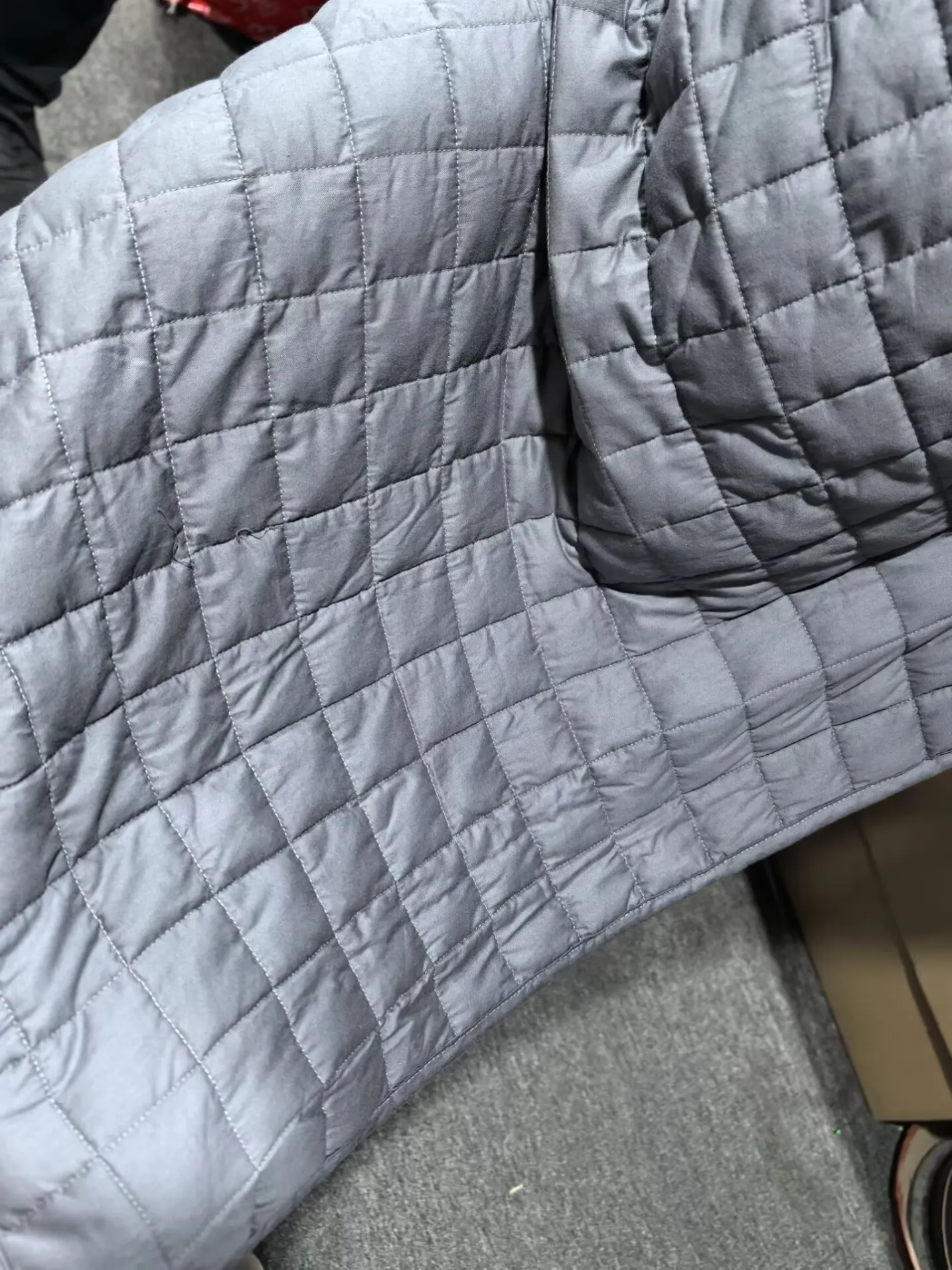
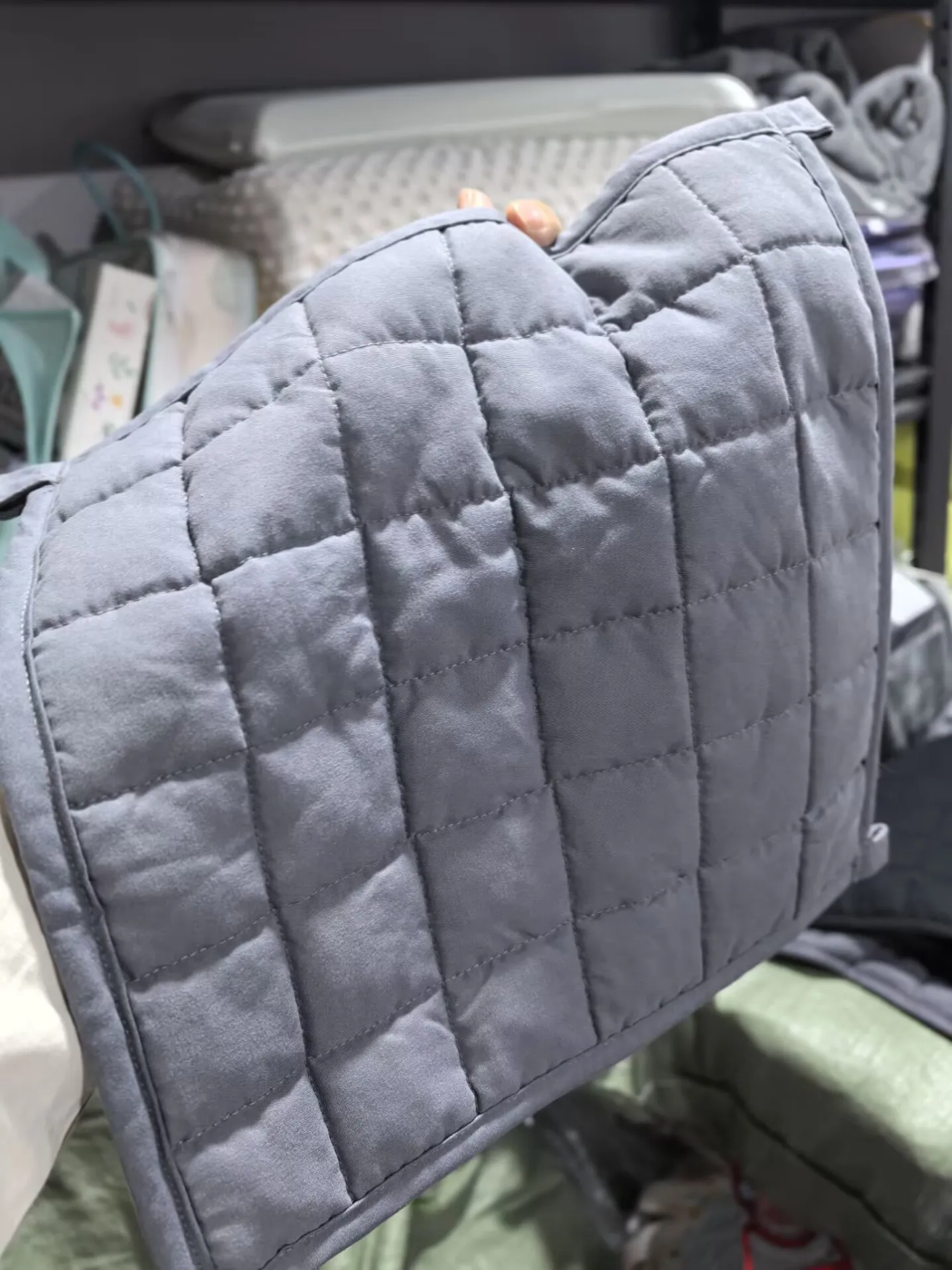
When you look at a weighted blanket, you may notice that the surface is divided into many small squares.
These are not only for decoration. They are part of the internal construction that helps control the filling.
Why not put all the glass beads into one large compartment?
The main reason is simple: the filling needs to stay distributed across the blanket instead of moving freely into one area. The pocket structure helps limit how far the filling can travel.

To keep the filling from moving too far
Imagine putting all the glass beads inside one large fabric bag.
When you lift one side of the bag, the beads can move towards the lower side. Some areas may have more filling, while other areas have much less.
A weighted blanket with one large compartment could have the same problem.
By dividing the blanket into smaller pockets, the filling is kept within separate sections. It can still move inside each pocket, but it cannot travel freely across the entire blanket.
This is the first reason for using a pocket structure.
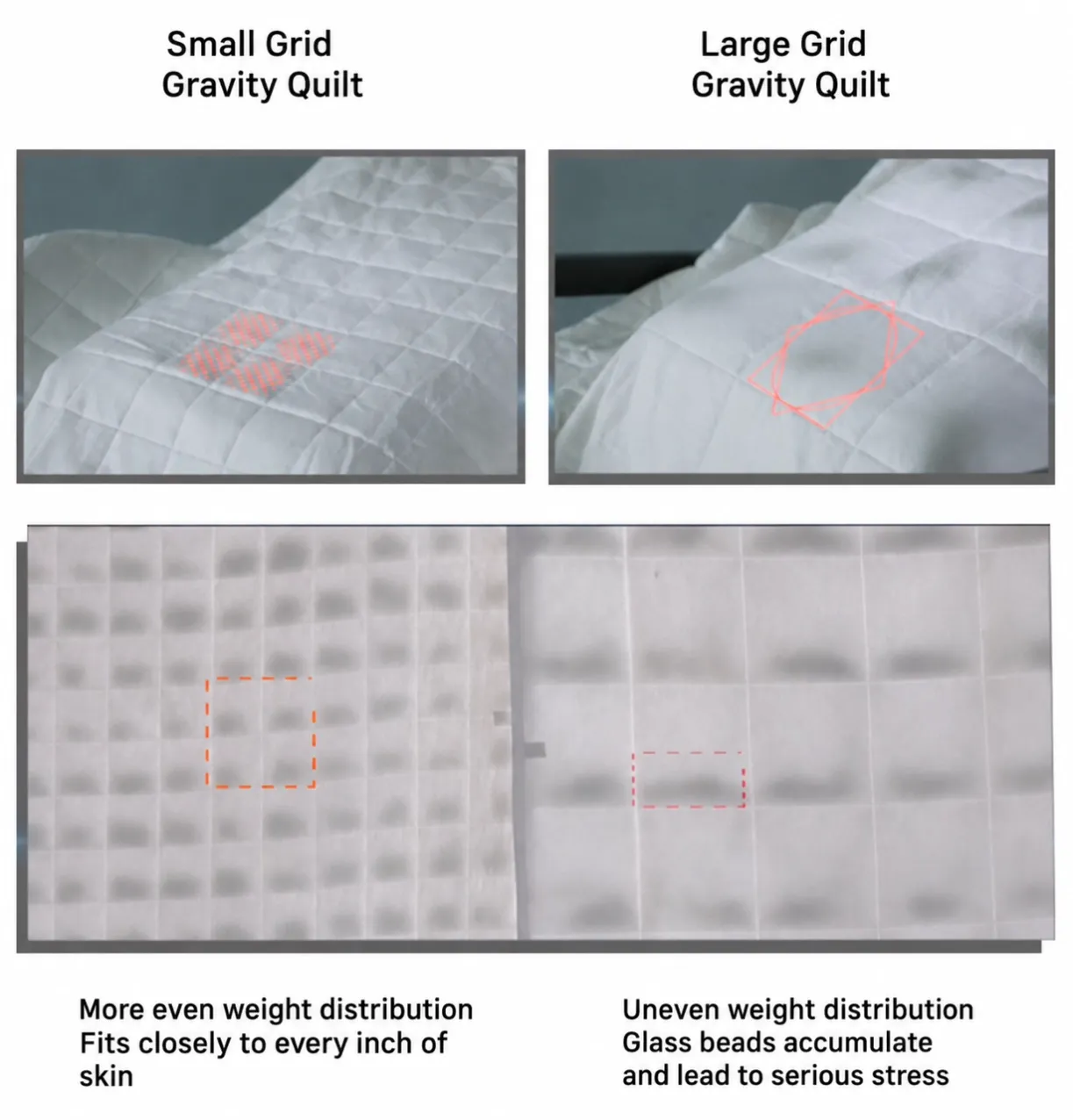
To help distribute the weight more evenly
The total weight of a blanket does not tell you whether the filling is evenly distributed.
For example, a blanket may meet its target finished weight, but if the filling gathers in certain areas, the blanket can still feel uneven.
Small pockets help limit this movement by keeping the filling within defined sections.
However, pockets alone do not guarantee even weight distribution. The amount of filling placed in each pocket also needs to be controlled during production.
Both the pocket construction and the filling process matter.
To make the filling easier to control during production
For a manufacturer, a pocket structure also makes the filling process more manageable.
Instead of treating the blanket as one large space, the filling can be divided into many smaller sections.
The production team can calculate the required filling amount based on the total filling weight and the number of filled pockets.
If the pocket count or blanket dimensions change, the filling calculation may also need to change.
This is why the filling plan should be confirmed together with the blanket size and quilting design before production begins.
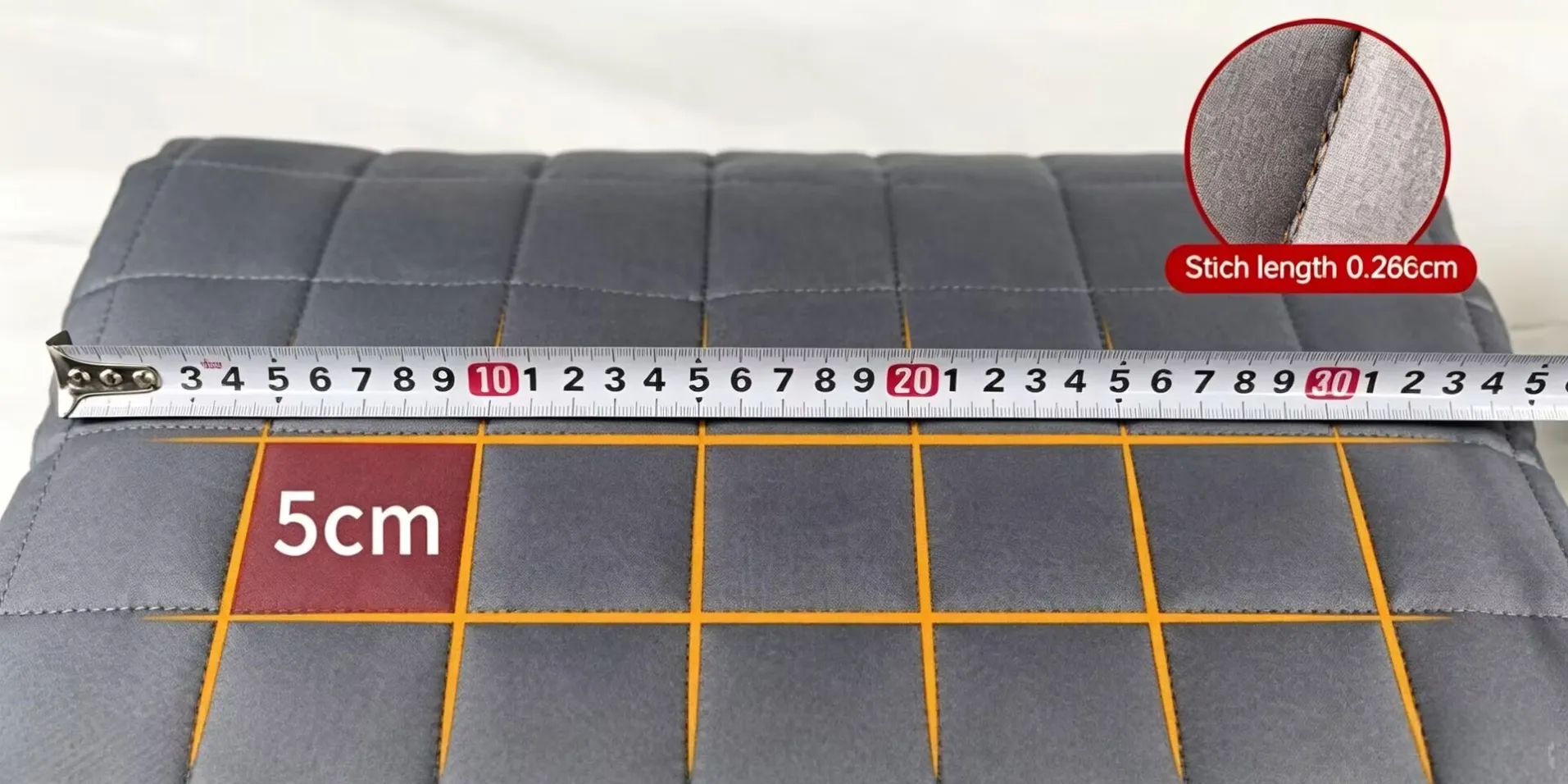
Pocket size makes a difference
Not all weighted blankets use the same pocket size.
Smaller pockets limit the distance that filling can move within each section. Larger pockets give the filling more room to move around.
But smaller is not automatically better for every product.
The pocket size needs to work with the blanket dimensions, target weight, filling material and overall construction.
For example, the amount of filling placed inside each pocket must be suitable for the space available. Otherwise, the finished pockets may not have the intended shape or feel.
The goal is to find a practical construction that controls the filling without making the product unnecessarily complicated to manufacture.
Quilting helps create the pocket structure
The pocket structure is created by stitching the fabric layers together.
These stitched lines separate one filled section from another. They also need to remain secure during normal handling and use.
If a seam opens, filling may escape or move into an adjacent section. This can affect the appearance and weight distribution of the blanket.
For this reason, quilting should not be judged only by how neat the pattern looks on the surface.
The construction also needs to suit the filling and the intended use of the product.
In our weighted blanket development, 5×5 cm quilting is used to divide the filling into small sections and help control bead movement. The appropriate quilting design should still be considered alongside the complete product specification.
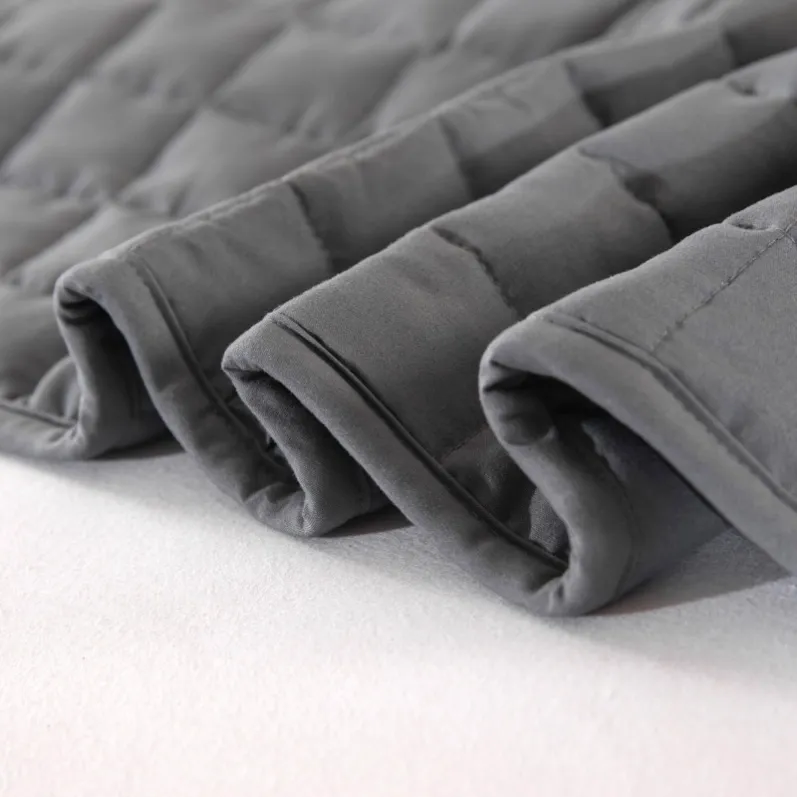
The pocket structure should be planned before sampling
When developing a private label weighted blanket, it is better to confirm the main construction details before making the sample.
These include:
- Finished blanket size and target weight
- Filling material and total filling weight
- Pocket size and number of pockets
- Quilting pattern and stitching requirements
- Fabric and inner-layer construction
These details are connected.
Changing the blanket size may affect the number of pockets. Changing the pocket count affects the amount of filling assigned to each pocket. Changing the filling material may also affect the space needed inside the pockets.
A sample is then used to check whether these decisions work together in the finished product.
Final Thoughts
Weighted blankets are divided into small pockets for a practical reason: to limit filling movement and help control weight distribution across the blanket.
The pocket structure also makes it easier to plan the filling quantity for production.
But the result depends on more than the number of pockets. Filling quantity, pocket size, quilting and stitching all need to work together.
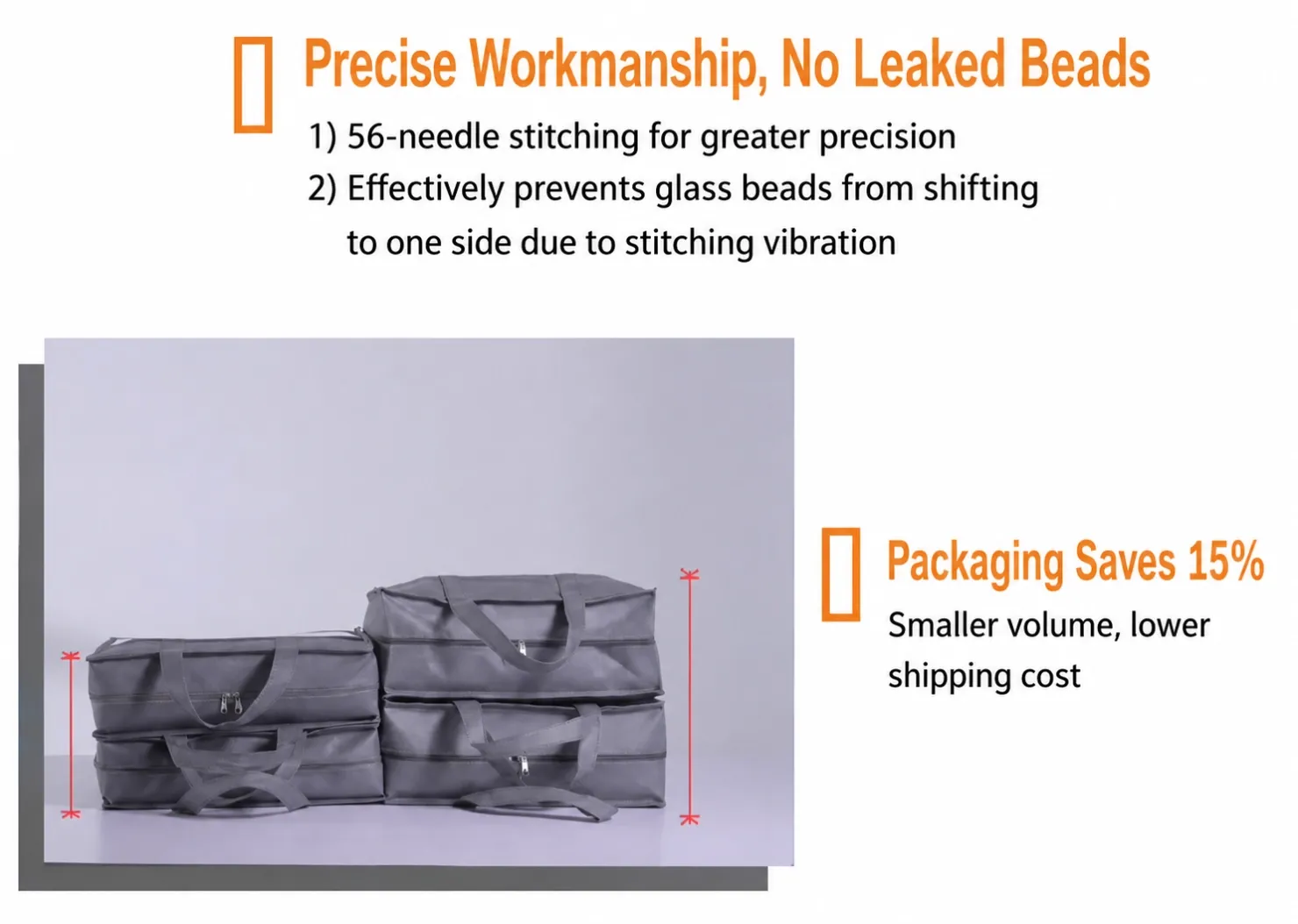
If you are developing a private label weighted blanket, send us your target size, weight and preferred quilting pattern. We can discuss the pocket construction and filling plan together before sampling.
More related pages:
Request a Quote
📩 Send us your project needs or specifications, and we will respond with a clear quotation and production suggestion within 24 hours.
Email: info@hengmy.com